| FindBook |
有 1 項符合
The Poet Li Po的圖書 |
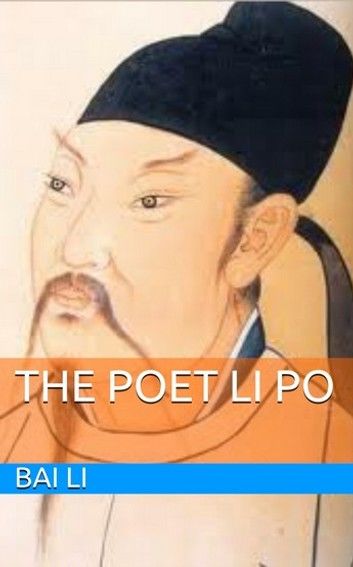 |
The Poet Li Po 作者:Bai Li,Arthur Waley 出版社:Lost Leaf Publications 出版日期:2013-07-23 語言:英文 |
 樂天KOBO
| 圖書館借閱 |
| 國家圖書館 | 全國圖書書目資訊網 | 國立公共資訊圖書館 | 電子書服務平台 | MetaCat 跨館整合查詢 |
| 臺北市立圖書館 | 新北市立圖書館 | 基隆市公共圖書館 | 桃園市立圖書館 | 新竹縣公共圖書館 |
| 苗栗縣立圖書館 | 臺中市立圖書館 | 彰化縣公共圖書館 | 南投縣文化局 | 雲林縣公共圖書館 |
| 嘉義縣圖書館 | 臺南市立圖書館 | 高雄市立圖書館 | 屏東縣公共圖書館 | 宜蘭縣公共圖書館 |
| 花蓮縣文化局 | 臺東縣文化處 |
|
|
Introduction
Since the Middle Ages the Chinese have been almost unanimous in regarding Li Po as their greatest poet, and the few who have given the first place to his contemporary Tu Fu have usually accorded the second to Li.
One is reluctant to disregard the verdict of a people upon its own poets. We are sometimes told by Frenchmen or Russians that Oscar Wilde is greater than Shakespeare. We are tempted to reply that no foreigner can be qualified to decide such a point.
Yet we do not in practice accept the judgment of other nations upon their own literature. To most Germans Schiller is still a great poet; but to the rest of Europe hardly one at all.
It is consoling to discover that on some Germans (Lilienkron, for example) Schiller makes precisely the same impression as he does on us. And similarly, if we cannot accept the current estimate of Li Po, we have at least the satisfaction of knowing that some of China’s most celebrated writers are on our side. About a.d. 816 the poet Po Chü-i wrote as follows (he is discussing Tu Fu as well as Li Po): “The world acclaims Li Po as its master poet. I grant that his works show unparalleled talent and originality, but not one in ten contains any moral reflection or deeper meaning.
“Tu Fu’s poems are very numerous; perhaps about 1,000 of them are worth preserving. In the art of stringing together allusions ancient and modern and in the skill of his versification in the regular metres he even excels Li Po. But such poems as the ‘Pressgang,’[1] and such lines as
“‘At the Palace Gate, the smell of wine and meat;
Out in the road, one who has frozen to death’
form only a small proportion of his whole work.”
The poet Yüan Chēn (779-831) wrote a famous essay comparing Li Po with Tu Fu.
“At this time,” he says (i.e., at the time of Tu Fu), “Li Po from Shantung was also celebrated for his remarkable writings, and the names of these two were often coupled together. In my judgment, as regards impassioned vigour of style, freedom from conventional restraint, and skill in the mere description of exterior things, his ballads and songs are certainly worthy to rub shoulders with Fu. But in disposition of the several parts of a poem, in carrying the balance of rhyme and tone through a composition of several hundred or even in some cases of a thousand words, in grandeur of inspiration combined with harmonious rhythm and deep feeling, in emphasis of parallel clauses, in exclusion of the vulgar or modern—in all these qualities Li is not worthy to approach Fu’s front hedge, let alone his inner chamber!”
“Subsequent writers,” adds the “T’ang History” (the work in which this essay is preserved), “have agreed with Yüan Chēn.”
Wang An-shih (1021-1086), the great reformer of the eleventh century, observes: “Li Po’s style is swift, yet never careless; lively, yet never informal. But his intellectual outlook was low and sordid. In nine poems out of ten he deals with nothing but wine or women.”
In the “Yü Yin Ts’ung Hua,” Hu Tzŭ (circa 1120) says: “Wang An-shih, in enumerating China’s four[3] greatest poets, put Li Po fourth on the list. Many vulgar people expressed surprise, but Wang replied: ‘The reason why vulgar people find Li Po’s poetry congenial is that it is easy to enjoy. His intellectual outlook was mean and sordid, and out of ten poems nine deal with wine or women; nevertheless, the abundance of his talent makes it impossible to leave him out of account.’”
Finally Huang T’ing-chien (a.d. 1050-1110), accepted by the Chinese as one of their greatest writers, says with reference to Li’s poetry: “The quest for unusual expressions is in itself a literary disease. It was, indeed, this fashion which caused the decay which set in after the Chien-an period (i.e., at the beginning of the third century a.d.).”
To these native strictures very little need be added. No one who reads much of Li’s poetry in the original can fail to notice the two defects which are emphasized by the Sung critics. The long poems are often ill-constructed. Where, for example, he wishes to convey an impression of horror he is apt to exhaust himself in the first quatrain, and the rest of the poem is a network of straggling repetitions. Very few of these longer poems have been translated. The second defect, his lack of variety, is one which would only strike those who have read a large number of his poems. Translators have naturally made their selections as varied as possible, so that many of those who know the poet only in translation might feel inclined to defend him on this score.
|