| FindBook |
有 1 項符合
Ned Wynkoop and the Lonely Road from Sand Creek的圖書 |
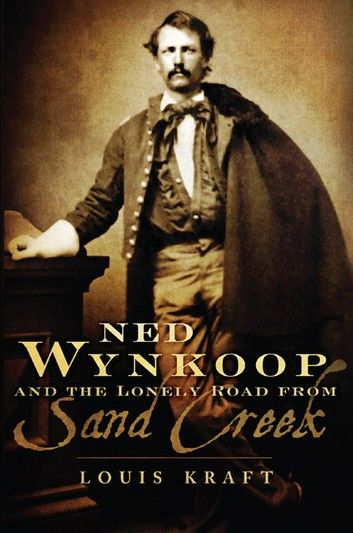 |
Ned Wynkoop and the Lonely Road from Sand Creek 作者:Louis Kraft 出版社:University of Oklahoma Press 出版日期:2013-02-14 語言:英文 |
 樂天KOBO
| 圖書館借閱 |
| 國家圖書館 | 全國圖書書目資訊網 | 國立公共資訊圖書館 | 電子書服務平台 | MetaCat 跨館整合查詢 |
| 臺北市立圖書館 | 新北市立圖書館 | 基隆市公共圖書館 | 桃園市立圖書館 | 新竹縣公共圖書館 |
| 苗栗縣立圖書館 | 臺中市立圖書館 | 彰化縣公共圖書館 | 南投縣文化局 | 雲林縣公共圖書館 |
| 嘉義縣圖書館 | 臺南市立圖書館 | 高雄市立圖書館 | 屏東縣公共圖書館 | 宜蘭縣公共圖書館 |
| 花蓮縣文化局 | 臺東縣文化處 |
|
|
When Edward W. Wynkoop arrived in Colorado Territory during the 1858 gold rush, he was one of many ambitious newcomers seeking wealth in a promising land mostly inhabited by American Indians. After he worked as a miner, sheriff, bartender, and land speculator, Wynkoop’s life drastically changed after he joined the First Colorado Volunteers to fight for the Union during the Civil War. This sympathetic but critical biography centers on his subsequent efforts to prevent war with Indians during the volatile 1860s.
A central theme of Louis Kraft’s engaging narrative is Wynkoop’s daring in standing up to Anglo-Americans and attempting to end the 1864 Indian war. The Indians may have been dangerous enemies obstructing “progress,” but they were also human beings. Many whites thought otherwise, and at daybreak on November 29, 1864, the Colorado Volunteers attacked Black Kettle’s sleeping camp. Upon learning of the disaster now known as the Sand Creek Massacre, Wynkoop was appalled and spoke out vehemently against the action.
Many of his contemporaries damned his views, but Wynkoop devoted the rest of his career as a soldier and then as a U.S. Indian agent to helping Cheyennes and Arapahos to survive. The tribes’ lifeways still centered on the dwindling herds of buffalo, but now they needed guns to hunt. Kraft reveals how hard Wynkoop worked to persuade the Indian Bureau to provide the tribes with firearms along with their allotments of food and clothing—a hard sell to a government bent on protecting white settlers and paving the way for American expansion.
In the wake of Sand Creek, Wynkoop strove to prevent General Winfield Scott Hancock from destroying a Cheyenne-Sioux village in 1867, only to have the general ignore him and start a war. Fearing more innocent people would die, Wynkoop resigned from the Indian Bureau but, not long thereafter, receded into obscurity. Now, thanks to Louis Kraft, we may appreciate Wynkoop as a man of conscience who dared to walk between Indians and Anglo-Americans but was often powerless to prevent the tragic consequences of their conflict.
|