| FindBook |
有 1 項符合
Handbook on Poverty and Inequality的圖書 |
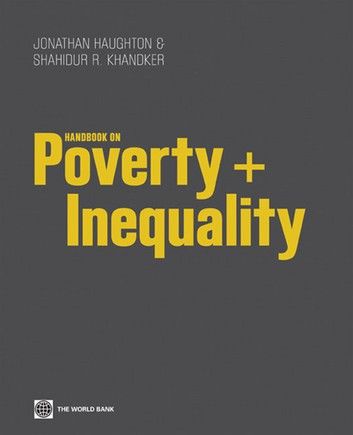 |
Handbook On Poverty And Inequality 作者:Khandker Shahidur;Haughton Jonathan 出版社:World Bank 出版日期:2009-03-27 語言:英文 |
 樂天KOBO
| 圖書館借閱 |
| 國家圖書館 | 全國圖書書目資訊網 | 國立公共資訊圖書館 | 電子書服務平台 | MetaCat 跨館整合查詢 |
| 臺北市立圖書館 | 新北市立圖書館 | 基隆市公共圖書館 | 桃園市立圖書館 | 新竹縣公共圖書館 |
| 苗栗縣立圖書館 | 臺中市立圖書館 | 彰化縣公共圖書館 | 南投縣文化局 | 雲林縣公共圖書館 |
| 嘉義縣圖書館 | 臺南市立圖書館 | 高雄市立圖書館 | 屏東縣公共圖書館 | 宜蘭縣公共圖書館 |
| 花蓮縣文化局 | 臺東縣文化處 |
|
|
圖書介紹 - 資料來源:博客來 評分:
圖書名稱:Handbook on Poverty and Inequality
內容簡介
For academics, policy analysts, researchers, graduate students, and government officials, this handbook from the World Bank provides technical and analytical tools to measure, describe, monitor, evaluate, and analyze poverty, as well as background materials for designing poverty reduction strategies. Haughton (economics, Suffolk U. and Beacon Hill Institute for Public Policy) and Khandker, an economist in the Development Research Group of the World Bank, explain how to measure poverty through analytical tools such as poverty lines and indexes, and analyze its dimensions, risks, and causes, as well as choose public actions and programs, identify indicators of progress, and monitor change. Included is discussion of the effects of taxation and spending, uses of survey data, and international poverty comparisons. The handbook was originally conceived to support training courses in poverty analysis and inequality and has been used in training workshops in countries around the world. It can be used for self-study or in training courses. An undergraduate-level background in science or social sciences is assumed. Annotation 穢2009 Book News, Inc., Portland, OR (booknews.com)
|