| FindBook |
有 1 項符合
Trust Us, We're Experts PA的圖書 |
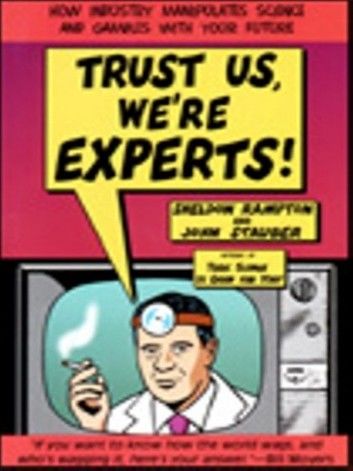 |
Trust Us, We're Experts PA 作者:Sheldon Rampton,John Stauber 出版社:Penguin Publishing Group 出版日期:2002-01-14 語言:英文 |
 樂天KOBO
| 圖書館借閱 |
| 國家圖書館 | 全國圖書書目資訊網 | 國立公共資訊圖書館 | 電子書服務平台 | MetaCat 跨館整合查詢 |
| 臺北市立圖書館 | 新北市立圖書館 | 基隆市公共圖書館 | 桃園市立圖書館 | 新竹縣公共圖書館 |
| 苗栗縣立圖書館 | 臺中市立圖書館 | 彰化縣公共圖書館 | 南投縣文化局 | 雲林縣公共圖書館 |
| 嘉義縣圖書館 | 臺南市立圖書館 | 高雄市立圖書館 | 屏東縣公共圖書館 | 宜蘭縣公共圖書館 |
| 花蓮縣文化局 | 臺東縣文化處 |
|
|
The authors of Toxic Sludge Is Good for You! unmask the sneaky and widespread methods industry uses to influence opinion through bogus experts, doctored data, and manufactured facts.
We count on the experts. We count on them to tell us who to vote for, what to eat, how to raise our children. We watch them on TV, listen to them on the radio, read their opinions in magazine and newspaper articles and letters to the editor. We trust them to tell us what to think, because there’s too much information out there and not enough hours in a day to sort it all out.
We should stop trusting them right this second.
In their new book Trust Us, We’re Experts!: How Industry Manipulates Science and Gambles with Your Future, Sheldon Rampton and John Stauber, authors of Toxic Sludge Is Good For You, offer a chilling exposé on the manufacturing of "independent experts."
Public relations firms and corporations know well how to exploit your trust to get you to buy what they have to sell: Let you hear it from a neutral third party, like a professor or a pediatrician or a soccer mom or a watchdog group. The problem is, these third parties are usually anything but neutral. They have been handpicked, cultivated, and meticulously packaged in order to make you believe what they have to say—preferably in an "objective" format like a news show or a letter to the editor. And in some cases, they have been paid handsomely for their "opinions."
For example:
You think that nonprofit organizations just give away their stamps of approval on products? Bristol-Myers Squibb paid $600,000 to the American Heart Association for the right to display AHA’s name and logo in ads for its cholesterol-lowering drug Pravachol. SmithKline Beecham paid the American Cancer Society $1 million for the right to use its logo in ads for Beecham’s Nicoderm CQ and Nicorette anti-smoking ads.
You think that a study out of a prestigious university is completely unbiased? In 1997, Georgetown University’s Credit Research Center issued a study which concluded that many debtors are using bankruptcy as an excuse to wriggle out of their obligations to creditors. Former U.S. Treasury Secretary Lloyd Bentsen cited the study in a Washington Times column and advocated for changes in federal law to make it harder for consumers to file for bankruptcy relief. What Bentsen failed to mention was that the Credit Research Center is funded in its entirety by credit card companies, banks, retailers, and others in the credit industry; that the study itself was produced with a $100,000 grant from VISA USA, Inc. and MasterCard International; and that Bentsen himself had been hired to work as a credit-industry lobbyist.
You think that all grassroots organizations are truly grassroots? In 1993, a group called Mothers Opposing Pollution (MOP) appeared, calling itself "the largest women’s environmental group in Australia, with thousands of supporters across the country." Their cause: A campaign against plastic milk bottles. It turned out that the group’s spokesperson, Alana Maloney, was in truth a woman named Janet Rundle, the business partner of a man who did P.R. for the Association of Liquidpaperboard Carton Manufacturers—the makers of paper milk cartons.
You think that if a scientist says so, it must be true? In the early 1990s, tobacco companies secretly paid thirteen scientists a total of $156,000 to write a few letters to influential medical journals. One biostatistician received $10,000 for writing a single, eight-paragraph letter that was published in the Journal of the American Medical Association. A cancer researcher received $20,137 for writing four letters and an opinion piece to the Lancet, the Journal of the National Cancer Institute, and The Wall Street Journal.
Rampton and Sta...
|