| FindBook |
有 1 項符合
Claude Lévi-Strauss的圖書 |
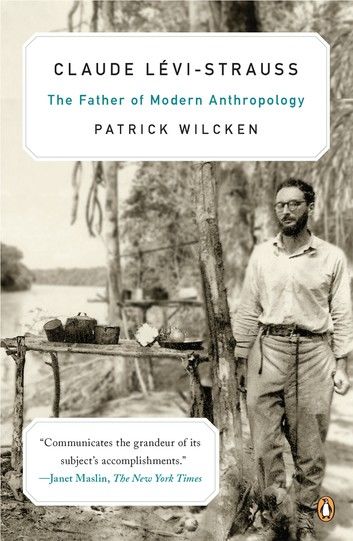 |
Claude Lévi-Strauss 作者:Patrick Wilcken 出版社:Penguin Publishing Group 出版日期:2010-10-07 語言:英文 |
 樂天KOBO
| 圖書館借閱 |
| 國家圖書館 | 全國圖書書目資訊網 | 國立公共資訊圖書館 | 電子書服務平台 | MetaCat 跨館整合查詢 |
| 臺北市立圖書館 | 新北市立圖書館 | 基隆市公共圖書館 | 桃園市立圖書館 | 新竹縣公共圖書館 |
| 苗栗縣立圖書館 | 臺中市立圖書館 | 彰化縣公共圖書館 | 南投縣文化局 | 雲林縣公共圖書館 |
| 嘉義縣圖書館 | 臺南市立圖書館 | 高雄市立圖書館 | 屏東縣公共圖書館 | 宜蘭縣公共圖書館 |
| 花蓮縣文化局 | 臺東縣文化處 |
|
|
When Claude Lévi-Strauss passed away in 2009 at age 100, France celebrated the life and contributions of not only a preeminent anthropologist, but one of the defining intellectuals of the 20th century. Just as Freud had shaken up the antiquarian discipline of psychiatry, so had Lévi-Strauss revolutionized anthropology, transforming it from the colonial-era study of “exotic” tribes to one consumed with fundamental questions about the nature of humanity and civilization itself.
Remarkably, there has never been a biography in English of the enigmatic Claude Lévi-Strauss. Drawing on a welter of original research and interviews with the anthropologist, Patrick Wilcken’s Claude Lévi-Strauss fills this void. In rich detail, Wilcken recreates Levi-Strauss’s peripatetic life: his groundbreaking fieldwork in some of the remotest reaches of the Amazon in the 1930s; his years as a Jew in Nazi-occupied France and an emigré in wartime New York; and his return to Paris in the late 1940s, where he clashed with Jean-Paul Sartre and fundamentally influenced fellow postwar thinkers from Jacques Lacan to Michel Foucault and Roland Barthes. It was in France that structuralism, the school of thought he founded, first took hold, creating waves far beyond the field of anthropology. In his heyday, Levi-Strauss was both a hero to contemporary intellectuals, and an international celebrity.
In Claude Levi-Strauss, Wilcken gives the reader a fascinating intellectual tour of the anthropologist’s landmark works: Tristes Tropiques, his most famous book, a literary meditation on his travels and fieldwork; The Savage Mind, which showed that “primitive” people are driven by the same intellectual curiosities as their Western counterparts, and finally his monumental four-volume Mythologiques, a study of the universal structures of native mythology in the Americas. In the years that Lévi-Strauss published these pioneering works, Wilcken observes, tribal societies seemed to hold the answers to the most profound questions about the human mind.
Following the great anthropologist from São Paulo to the Brazilian interior, and from New York to Paris, Patrick Wilcken’s Claude Lévi-Strauss is both an evocative journey and an intellectual biography of one of the 20th century’s most influential minds.
|