| FindBook |
有 1 項符合
Agile Network Businesses的圖書 |
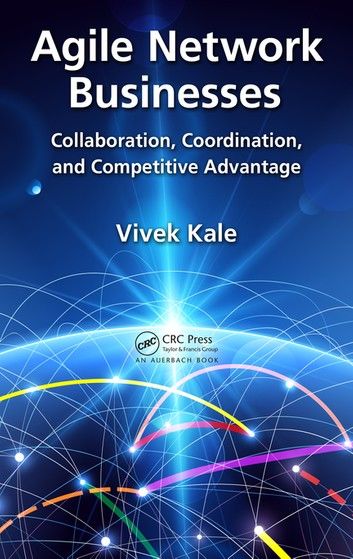 |
Agile Network Businesses 作者:Vivek Kale 出版社:CRC Press 出版日期:2017-07-20 語言:英文 |
 樂天KOBO
| 圖書館借閱 |
| 國家圖書館 | 全國圖書書目資訊網 | 國立公共資訊圖書館 | 電子書服務平台 | MetaCat 跨館整合查詢 |
| 臺北市立圖書館 | 新北市立圖書館 | 基隆市公共圖書館 | 桃園市立圖書館 | 新竹縣公共圖書館 |
| 苗栗縣立圖書館 | 臺中市立圖書館 | 彰化縣公共圖書館 | 南投縣文化局 | 雲林縣公共圖書館 |
| 嘉義縣圖書館 | 臺南市立圖書館 | 高雄市立圖書館 | 屏東縣公共圖書館 | 宜蘭縣公共圖書館 |
| 花蓮縣文化局 | 臺東縣文化處 |
|
|
"A highly readable and yet comprehensive book on network businesses that have become governable with the advent of cloud and big data computing. Vivek Kale is a master of simplifying the complex world of network theory and its relevance to business."
—Jagdish N. Sheth, Charles H. Kellstadt Professor of Marketing, Emory University
Agile Network Businesses: Collaboration, Coordination, and Competitive Advantage reflects the shift from traditional networks to virtual and agile networks that enable businesses to operate dynamically, thereby representing markets more closely. This book enables IT managers and business decision-makers to understand clearly what network businesses and enterprises are, what they can do for them, and how to realize them.
Customers in geographically dispersed markets are demanding higher quality products in a greater variety, at lower cost, and in a shorter time. Thus, enterprises have moved from a few centralized and vertically integrated facilities to geographically dispersed networks of capabilities, competencies and resources, which are the core of network businesses. Enterprises are now constructing more fluid network businesses in which each member facility focuses on differentiation and relies increasingly on its partners, suppliers, and customers to provide the rest. Network businesses have emerged as an organizational paradigm for collaboration and coordination across loosely connected individual organizations.
This pragmatic book:
- Introduces network solutions and distributed systems that are a first step towards enabling a network enterprise. It also gives a detailed description of networks and agent system that have paved the road to network enterprises.
- Describes the basics of service-oriented architecture (SOA), cloud computing, and big data that are essential to network enterprises.
- Details the distinguishing aspects of network enterprises, which include virtual enterprises, management of network enterprises, and collaborative network enterprises.
- Covers such major application areas as supply, manufacturing, e-business, platform, social and wireless sensor networks.
- Introduces decision networks in the context of supply chain networks
This book reinterprets the traditional supply chain in terms of the flow of decisions, information, and materials, which leads to reconfiguring the traditional supply chain network into mutually separate decision networks (e.g., fourth-party logistics or 4PL), information networks (e.g., wireless sensor networks), and logistics networks (e.g., third-party logistics or 3PL).
|