| FindBook |
有 1 項符合
Ichnographia Rustica的圖書 |
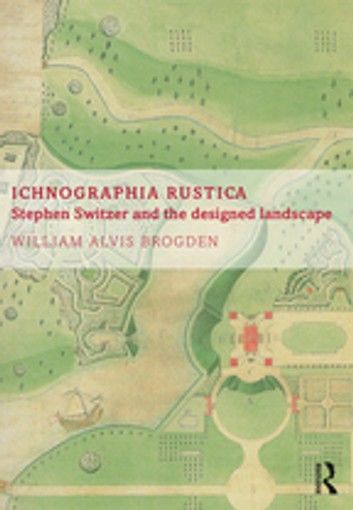 |
Ichnographia Rustica 作者:William Alvis Brogden 出版社:Taylor & Francis 出版日期:2017-02-17 語言:英文 |
 樂天KOBO
| 圖書館借閱 |
| 國家圖書館 | 全國圖書書目資訊網 | 國立公共資訊圖書館 | 電子書服務平台 | MetaCat 跨館整合查詢 |
| 臺北市立圖書館 | 新北市立圖書館 | 基隆市公共圖書館 | 桃園市立圖書館 | 新竹縣公共圖書館 |
| 苗栗縣立圖書館 | 臺中市立圖書館 | 彰化縣公共圖書館 | 南投縣文化局 | 雲林縣公共圖書館 |
| 嘉義縣圖書館 | 臺南市立圖書館 | 高雄市立圖書館 | 屏東縣公共圖書館 | 宜蘭縣公共圖書館 |
| 花蓮縣文化局 | 臺東縣文化處 |
|
|
One of the most significant occurrences in the history of design was the creation of the English Landscape Garden. Accounts of its genesis…the surprising structural change from the formal to a seeming informal are numerous. But none has ever been quite convincing and none satisfactorily placed the contributions of Stephen Switzer.
Unlike his contemporaries, Switzer - an 18th century author of books on gardening and agricultural improvement - grasped a quite new principle: that the fashionable pursuit of great gardens should be "rural and extensive", rather than merely the ornamentation of a particular part of an estate. Switzer saw that a whole estate could be enjoyed as an aesthetic experience, and by the process of improving its value, could increase wealth. By encouraging improvers to see the garden in his enlarged sense, he opened up the adjoining countryside, the landscape, and made the whole a subject of unified design. Some few followed his advice immediately, such as Bathurst at Cirencester. But it took some time for his ideas to become generally accepted.
Could this vision, and its working out in practice between 1710 and 1740 be the very reason for such changes? 300 years after the first volume of his writings began to be published; this book offers a timely critical examination of lessons learned and Switzer’s roles. In major influential early works at Castle Howard and Blenheim, and later the more "minor" works such as Spy Park, Leeswood or Rhual, the relationships between these designs and his writings is demonstrated. In doing so, it makes possible major reassessment of the developments, and thus our attitudes to well-known works. It provides an explanation of how he, and his colleagues and contemporaries first made what he had called Ichnographia Rustica, or more familiarly Modern Gardening from the mid-1740s, land later landscape gardens.
It reveals an exceptional innovator, who by transforming the philosophical way in which nature was viewed, integrated good design with good farming and horticultural practice for the first time. It raises the issue of the cleavage in thought of the later 18th century, essentially whether the ferme ornee as the mixture of utile and dulci was the perfect designed landscape, or whether this was the enlarged garden with features of "unadorned nature"? The book discusses these considerable and continuing contrary influences on later work, and suggests Switzer has many lessons for how contemporary landscape and garden design ought be perceived and practised.
|