| FindBook |
有 1 項符合
Canadian-American Planning的圖書 |
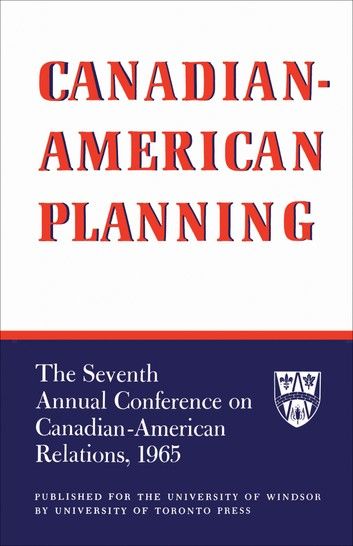 |
Canadian-American Planning 作者:University of Windsor 出版社:University of Toronto Press 出版日期:1966-12-15 語言:英文 |
 樂天KOBO
| 圖書館借閱 |
| 國家圖書館 | 全國圖書書目資訊網 | 國立公共資訊圖書館 | 電子書服務平台 | MetaCat 跨館整合查詢 |
| 臺北市立圖書館 | 新北市立圖書館 | 基隆市公共圖書館 | 桃園市立圖書館 | 新竹縣公共圖書館 |
| 苗栗縣立圖書館 | 臺中市立圖書館 | 彰化縣公共圖書館 | 南投縣文化局 | 雲林縣公共圖書館 |
| 嘉義縣圖書館 | 臺南市立圖書館 | 高雄市立圖書館 | 屏東縣公共圖書館 | 宜蘭縣公共圖書館 |
| 花蓮縣文化局 | 臺東縣文化處 |
|
|
The Seventh Annual Seminar of Canadian-American relations held at the University of Windsor brought together a number of distinguished participants, representing such interested groups as labour, business, and research, to discuss planning. The result is this volume which brings together some of the contributors to discuss this important and controversial area of Canadian-American relations.
The noted economist Harry G. Johnson begins by defining planning in the Canadian-American context as "the general process of attempting to take stock of the present situation and its evolving trends, predict the general direction of future developments, assess these in the light of generally accepted social and economic goals, and where necessary formulate programs and policies designed to shape future developments as closely as possible to conform to what is considered to be in the social interest." He then identifies several promising areas for joint planning, including the liberalization of trade, the use of energy, the use of water resources, and the organization of transportation. Subsequent papers on official and business planning echo the approach outlined in Dr. Johnson's definition, and stress the need for vision based on discernment of where we are and where we are going. These discussions are grouped into the categories Business, Labour, New Areas of Co-operation, Automation, and Technical Change.
Finally, Paul Ylvisaker, Director of the Public Affairs Program for the Ford Foundation in New York, under the title "The Human Price of Planning" adds a cogent warning that this future focus, however skilfully it is related to present knowledge, may not be enough, pointing to recent events in the University of California at Berkeley and in Watts, California, as an indication of the importance of being prepared for and receptive to the immediate and unexpected. He suggests that planning for the cities of the future should be the most important concern for Canadian and American planners.
By bringing together a variety of viewpoints on some of the most relevant aspects of planning for the future this volume will provoke lively discussion, and provide a useful reference, for all those who will take part in planning for the future, and those who will be affected by it.
|