| FindBook |
有 1 項符合
Honus Wagner的圖書 |
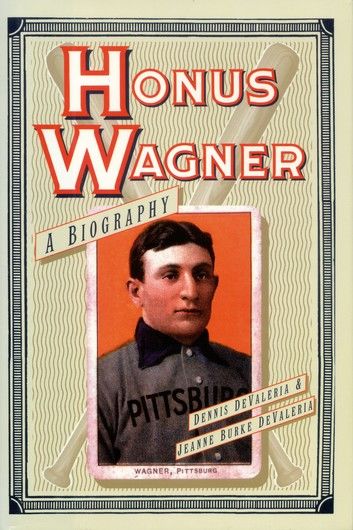 |
Honus Wagner 作者:Dennis DeValeria,Jeanne Burke DeValeria 出版社:Henry Holt and Co. 出版日期:2024-09-04 語言:英文 |
 樂天KOBO
| 圖書館借閱 |
| 國家圖書館 | 全國圖書書目資訊網 | 國立公共資訊圖書館 | 電子書服務平台 | MetaCat 跨館整合查詢 |
| 臺北市立圖書館 | 新北市立圖書館 | 基隆市公共圖書館 | 桃園市立圖書館 | 新竹縣公共圖書館 |
| 苗栗縣立圖書館 | 臺中市立圖書館 | 彰化縣公共圖書館 | 南投縣文化局 | 雲林縣公共圖書館 |
| 嘉義縣圖書館 | 臺南市立圖書館 | 高雄市立圖書館 | 屏東縣公共圖書館 | 宜蘭縣公共圖書館 |
| 花蓮縣文化局 | 臺東縣文化處 |
|
|
"We think we have made a deal which will materially help us out," Fred Clarke, manager of the National Louisville Colonels, prophetically told the local media in 1897. "After negotiating for some days we have succeeded in securing Hans Wagner...He is a big, heavy German, with very large hands, and is powerful as a bull. He kills the ball." A few years later, the widely read sportswriter Hugh Fullteron would refer to Wagner as "the nearest approach to a baseball machine ever constructed."
Honus Wagner is generally acknowledged as the finest shortstop in baseball history. Along with Babe Ruth, Ty Cobb, Christy Mathewson, and Walter Johnson, he was one of the first five players to be elected to the Baseball Hall of Fame. His rare 1909 baseball card--known to collectors as the Holy Grail of American memorabilia--fetched nearly half a million dollars at auction in 1991. His rise paralleled the development of baseball as the national pastime, and his playing skills remain legendary. He was, possibly, the first superstar of American sports.
And yet, amazingly, a full-length biography of Honus Wagner had never before appeared. Here, Dennis and Jeanne DeValeria tell the sports hero's whole story. The son of German immigrants, Wagner (1874-1955) grew up in Andrew Carnegie's Pittsburgh, working in coal mines at age twelve. At age thirteen he worked in a steel mill; at twenty-one he was a professional baseball player. Despite his hardscrabble background, he came to be respected by those in the highest reaches of American society: when he became an icon, he would know President Howard Taft and industrialist Henry Ford. And with prestige came wealth: one of the highest-paid players in the game, he was among the first in his hometown to own an automobile.
At a time when baseball was a raw, aggressive game played by rugged men, the unflappable Wagner's humble ways enhanced his miraculous performance throughout his twenty-one-year career, including three seasons with the Louisville Colonels and eighteen with the Pittsburgh Pirates. Wagner's gradual emergence from the pack into stardom and popularity is described here in rich detail. But the book also reveals much of Wagner's family and personal life--his minor league career, his values, his failed business ventures during the Depression, his later years--about which, until now, there had been no well known narrative.
Neither the "rowdy-ball" ruffian nor the teetotal saint constructed of legend, Wagner is presented here in a complete portrait--one that offers a vivid impression of the era when baseball was America's game and the nation was evolving into the world's industrial leader.
|