| FindBook |
有 1 項符合
Learn to Play: Designing Tutorials for Video Games的圖書 |
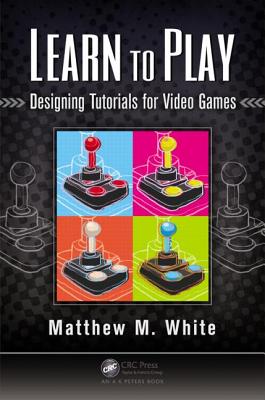 |
Learn to Play: Designing Tutorials for Video Games 作者:White,Matthew M. 出版社:Taylor & Francis 出版日期:2014-06-03 語言:英文 規格:平裝 / 15.2 x 23.5 x 1.3 cm / 普通級 |
 博客來
博客來| 圖書館借閱 |
| 國家圖書館 | 全國圖書書目資訊網 | 國立公共資訊圖書館 | 電子書服務平台 | MetaCat 跨館整合查詢 |
| 臺北市立圖書館 | 新北市立圖書館 | 基隆市公共圖書館 | 桃園市立圖書館 | 新竹縣公共圖書館 |
| 苗栗縣立圖書館 | 臺中市立圖書館 | 彰化縣公共圖書館 | 南投縣文化局 | 雲林縣公共圖書館 |
| 嘉義縣圖書館 | 臺南市立圖書館 | 高雄市立圖書館 | 屏東縣公共圖書館 | 宜蘭縣公共圖書館 |
| 花蓮縣文化局 | 臺東縣文化處 |
|
|
圖書介紹 - 資料來源:博客來 評分:
圖書名稱:Learn to Play: Designing Tutorials for Video Games
內容簡介
"Preface There has been a lot of discussion in the last decade about games that teach people something or other. These are mostly excellent books, with people like Gee and Squire really spearheading our curiosity into how games might make people think about things, whether it is playing Civilization and thinking about the ascent of humanity, or playing Shadow of the Colossus and really thinking about protagonist roles in literature. With years of heavy research going into this area, surely we have come to realize that games really do make people think. However, I would like to throw my hat into the ring and say that we have focused almost primarily on how games can teach people how to do other things or to think about other things. We are looking for transfer, some evidence that playing Civilization really did get someone interested in history, or Trauma Center in surgery, Phoenix Wright in law, and so on. While it is important for educators, particularly educational policymakers, to see that playing SimCity or Minecraft might really get people interested in civil engineering, city planning, or construction, it is not really important for game designers. Let's be honest--we want our players to be moved and changed by our games, but the vehicle through which we do that is fun. Now, what is fun? Well, people like Raph Koster have amazing answers to that question, but it is beyond the scope of my book. xviii Preface What I am going to talk about is how games teach us about themselves. They do this through tutorials. Before reading, I want you to throw out what you think I mean by tutorial. Literally delete every record of it from your brain, supposing that requires a hammer and an ice-cream scoop"--
|