| FindBook |
有 1 項符合
Stronger Than Steel的圖書 |
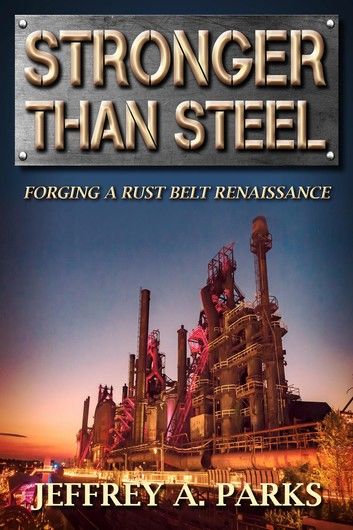 |
Stronger Than Steel 作者:Jeffrey A Parks 出版社:ROCKY RAPIDS PRESS, LLC 出版日期:2018-05-10 語言:英文 |
 樂天KOBO
| 圖書館借閱 |
| 國家圖書館 | 全國圖書書目資訊網 | 國立公共資訊圖書館 | 電子書服務平台 | MetaCat 跨館整合查詢 |
| 臺北市立圖書館 | 新北市立圖書館 | 基隆市公共圖書館 | 桃園市立圖書館 | 新竹縣公共圖書館 |
| 苗栗縣立圖書館 | 臺中市立圖書館 | 彰化縣公共圖書館 | 南投縣文化局 | 雲林縣公共圖書館 |
| 嘉義縣圖書館 | 臺南市立圖書館 | 高雄市立圖書館 | 屏東縣公共圖書館 | 宜蘭縣公共圖書館 |
| 花蓮縣文化局 | 臺東縣文化處 |
|
|
Stronger than Steel is the story of a company town, Bethlehem, Pennsylvania, that used alternative economic development strategies, including arts, tourism, and a casino to propel its way out of devastation of deindustrialization. Bethlehem’s strategies have been rewarded with dramatic results.
In 2016, among Pennsylvania cities with a population over 20,000, Bethlehem had the highest median household income, lowest poverty rate and highest residential property value. Bethlehem has successfully reversed the brain drain and has become a magnet for an educated workforce, attracting millenials with college degrees and retirees looking for a culturally dynamic community.
The book is, in part, a memoir by Jeffrey A. Parks, the attorney who conceived Musikfest, the downtown festival that premiered in 1984 and now attracts over one million guests annually; Christkindlmarkt Bethlehem, an annual Christmas festival; and the Banana Factory Arts Center. Parks lead the team that developed the ten acre SteelStacks Arts and Culture Campus in the former Bethlehem Steel plant. Parks is an advocate for the incorporation of the arts in community and economic development planning.
Stronger than Steel begins with a brief history of Bethlehem which was a closed Protestant Moravian community from its founding in 1741 until industrial revolution invaded the town with a canal, then a railroad. When a zinc smelting plant opened in 1853, it was the beginning of hot metal production that lasted until the steel plant closed in 1995. It was iron and steel brought men from all over Europe, the Caribbean and Mexico to the town. The men brought wives who attracted industries that employed women, including textiles and confections. The industries were the backbone of the community until after World War II, when the twin forces of deindustrialization and suburbanization conspired to turn Bethlehem, and most other industrial cities, into repositories of industries that were dying, impoverished residents who moved into the row houses abandoned by the now suburban middle class, and civic and religious institutions that could not move.
While Parks infuses his story and first hand observations throughout the book, he artfully incorporates the stories of many of the individuals who played key roles in developing the city that exists today. City officials, community and business leaders offer insights into the evolution of the community.
***Stronger than Steel***is a passionate outreach to architects, planners, artists, arts organizations, community leaders and public officials to design urban spaces for community connections, a practice now called creative placemaking. Parks concludes that arts offered in public spaces are crucial to building social capital, which in turn is important to community viability and economic prosperity. With ArtsQuest, the parent non-profit that now presents Musikfest and the arts programs developed over 30 years generating over 6 billion media impressions annually, Parks notes that the arts have a significant influence on a city’s brand. That brand is also essential to attract the human and economic capital to sustain and grow a community.
Stronger than Steel tells a complex story that runs counter to the current narrative about the Rust Belt. For those interested in this pragmatic, positive version of our country’s troubled post-industrial communities, it is a must read.
|