Baby Monkey Waters Flowers 猴子澆花
無論修行也好,做人也好,佛教一再強調要有智慧,凡事講求中道。所謂「中道」即不偏不倚,也就是正道。然而,如何才能掌握中道呢?就需要智慧來引導,因此智慧對我們而言,實在很重要。
經典裡有一個故事說到:在國王的花園裡,住著一個猴子家庭,成員有爸爸、媽媽和孩子。另外,花園裡還有一個專門負責照顧花朵的園丁。
由於園丁跟猴子們相處得很好,所以有時候猴子就會幫忙園丁,做些拔草、澆水的工作。
有一天,王宮外面的廣場傳來演戲的聲音,園丁聽到了,實在好心動,很想跑去看戲。可是,澆花的時間到了,他也不敢走開。就這樣,人雖然在花園裡,可是一顆心七上八下,坐立難安。好朋友猴子看出了他的心情,於是體諒地說:「去啦,去啦,我幫你澆水,你放心吧。」
園丁一聽,高興地說:「謝謝,就拜託你了。不過,國王常常告誡我們『滴水如金』,你得好好的澆,不能浪費喔 !」
「沒有問題,沒有問題,你趕快去吧!」猴子拍拍胸脯回答。園丁走了以後,猴子爸爸要小猴子去澆水。澆水之前,猴子爸爸告訴孩子:「滴水如金,不能浪費喔!該多澆的,水就給多一點;不該澆的,就給少一點。」
孩子想了想,問道:「多和少該怎麼分辨呢?」
猴子爸爸說:「這很簡單,根深的植物,多給一點水,根淺的少澆一點。」
孩子點點頭說:「我懂了!」隨後小猴子就開始動手澆花。
過了一會兒,新的問題又來了,從地面上根本看不出根是深、還是淺,該怎麼辦呢?
小猴子想了一下,忽然拍掌笑起來,說:「有了,有了,有辦法。」
牠決定將每朵花從泥土裡拔出來看一看,這樣不就知道根的深淺了嗎?
「這個根深一點,水多澆一點」、「這個淺一點,少澆一點。」就這樣,整座花園裡的花,每一株都被小猴子給拔了起來,再擺回去。
等到園丁回來一看,花苗東倒西歪,有的甚至都枯掉了。他難過得不得了,可是也不敢責備猴子, 因為對方是好心幫忙。
社會上也常常有這種現象,明明是一番好意, 結果卻弄巧成拙,反而幫了倒忙。這就是因為缺乏智慧,所以佛法裡說好心很重要,但更要緊的是要有智慧。禪宗提到「不求成佛作祖,只求能夠開悟」,開悟就是有智慧,有了智慧之後,方能打開成佛之門, 也才能看清世間真相。
佛教是很講究智慧的宗教,奉勸天下學佛人,多閱藏、多聽經,學佛法、開智慧,這才是真正的自救、救人之道。
Once upon a time, in a beautiful garden, there lived a monkey family. There was Papa Monkey, Mama Monkey, and Baby Monkey. Taking care of their beautiful garden was Michael, the gardener.
They were all very good friends and the monkey family always helped Michael to take care of the beautiful garden home.
One day, a circus1 arrived just outside the garden. Michael could hear the music and the crowd as he was working. But he could not leave the garden because he had to look after the flowers, the plants, and the trees.
As the days passed, Michael would always peek2 through the bushes3 at the circus outside the garden. Although his hands were tending4 to the trees and flowers, his mind was not. All he could think about was the circus.
Knowing that Michael longed to see the circus, Papa Monkey made a suggestion5:
“Just go see the circus, my friend! I’ll take care of the garden while you’re gone.”
“No, no. It’s okay. The garden is too much of a burden6 for you!” said Michael.
But Papa Monkey insisted7, “Don’t worry! I’ll ask Baby Money to help me. Just go and see the circus!
“Are you sure? I might be gone for quite a while,” Michael replied.
“Yes, I am very sure! You go on ahead!” said Papa Monkey.
Michael’s eyes lit up with excitement8. “Thank you so much Papa Monkey! Please remember that water is precious9, so please be careful not to waste any water when you water the plants.”
“Of course I know. Now please just go and enjoy yourself at the circus!” replied Papa Monkey.
So, Michael went to see the circus. And just as he promised10, Papa Monkey asked Baby Monkey to help water half the garden.
“Water is precious, little one, so please tend to the plants and flowers carefully!” said Papa Monkey.
“Don’t waste water, each plant and flower needs just the right amount, so only use that much water,” repeated Papa Monkey.
“But how do I know how much water is enough?” asked Baby Monkey.
“That’s easy. Those with long roots need more water. Those with short roots need less water,” explained Papa Monkey.
“Ok, I understand!” nodded Baby Monkey.
Soon enough, Baby Monkey realized11 it was more difficult12 than he thought.
“I can’t see how long the roots are! So how do I figure out13 how much water to give? he wondered14.
Baby Monkey sat down on the grass and began to think hard about this problem.
“I got it!” He shouted15. “I’ll pull them out of the ground. That way, I can see whether the plants have long or short roots!”
Full of excitement, Baby Monkey started to pull the plants out of the soil, so he could check the length of each root.
“This one has short roots, so it needs less water. That one has long roots, so it needs more water,” Baby Monkey thought proudly16 to himself.
He then planted them back into the soil and watered them accordingly17.
A few days later, Michael returned from the circus. When he saw the part of the garden that was tended by Papa Monkey, he was very happy. The plants all looked healthy and beautiful!
But when he saw what Baby Monkey had done to the other half of the garden. Michael’s heart sank18… All the plants were either dead or dying. Half of his beloved19 garden was ruined20.
Baby Monkey was so ashamed21 of his mistake when he saw how upset Michael was. He explained that he pulled out the plants only to make sure they received water according to the length of their roots.
Michael knew that Baby Monkey was only trying to help and that his intentions22 were good. So he decided to forgive Baby Monkey and at once picked up his gardening tools to fix his once beautiful garden.
The moral of this story is that sometimes when we want to help others, we might create more problems for them in the end. It is important to have the skill and knowledge of how to best help others. Knowledge comes from learning step by step. For things we have no knowledge of, we should be humble23 and not hesitate24 to ask for advice. To be a know-it-all is dangerous as we might be ignorant25 of our own failings and shortcomings.
Just as Venerable Master Hsing Yun says,
“Taking precaution at the beginning can nip trouble in the bud; being aware of one’s mistakes can eliminate trouble.”
We all make mistakes, and when we do, we must have the courage26 to admit them and make amends27. Willingness to admit one’s errors is one of the highest virtues28. .
VOCABULARY
1. circus (n.) 馬戲團
2. peek (v.) 窺視;偷看
3. bushes (n.) 灌木叢
4. tending (v.) 照顧;照料
5. suggestion (n.) 提議;建議
6. burden (n.) 負擔
7. insisted (v.) 堅持說
8. excitement (n.) 興奮
9. precious (adj.) 珍貴的
10. promised (v.) 答應
11. realized (v.) 意識到
12. difficult (adj.) 困難的
13. figure out (p.v.) 弄明白;想出
14. wondered (v.) 想知道
15. shouted (v.)大聲叫嚷
16. proudly (adv.) 自豪地
17. accordingly (adv.) 按情況
18. heart sank (idiom)感到難過
19. beloved (adj.) 心愛的
20. ruined (adj.) 毀掉的
21. ashamed (adj.) 慚愧的
22. intentions (n.) 目的;意圖
23. humble (adj.) 謙遜的
24. hesitate (v.) 猶豫;遲疑
25. ignorant (adj.) 無知的
26. courage (n.) 勇氣
27. make amends (p.v.) 賠禮道歉
28. virtues (n.) 美德;優點
星雲大師法語
Dharma Words by Venerable Master Hsing Yun
防微能夠杜漸,知錯能夠弭患。
Taking precaution at the beginning can nip trouble in the bud;
Being aware of one’s mistakes can eliminate trouble.
| FindBook |
有 6 項符合
星雲說喻 中英對照版(6)Bodhi Light Tales:Volume 6(附QR Code線上音檔)的圖書 |
| 圖書選購 |
| 型式 | 價格 | 供應商 | 所屬目錄 | $ 273 |
 iRead灰熊愛讀書 iRead灰熊愛讀書 |
佛教 |
$ 276 |
 三民網路書店 三民網路書店 |
宗教命理 |
$ 276 |
 誠品網路書店 誠品網路書店 |
宗教 |
$ 315 |
 金石堂 KingStone 金石堂 KingStone |
星雲法師 |
$ 315 |
 TAAZE 讀冊生活 TAAZE 讀冊生活 |
中文書 |
$ 315 |
 博客來 博客來 |
生活佛法 |
|---|
| 圖書館借閱 |
| 國家圖書館 | 全國圖書書目資訊網 | 國立公共資訊圖書館 | 電子書服務平台 | MetaCat 跨館整合查詢 |
| 臺北市立圖書館 | 新北市立圖書館 | 基隆市公共圖書館 | 桃園市立圖書館 | 新竹縣公共圖書館 |
| 苗栗縣立圖書館 | 臺中市立圖書館 | 彰化縣公共圖書館 | 南投縣文化局 | 雲林縣公共圖書館 |
| 嘉義縣圖書館 | 臺南市立圖書館 | 高雄市立圖書館 | 屏東縣公共圖書館 | 宜蘭縣公共圖書館 |
| 花蓮縣文化局 | 臺東縣文化處 |
|
|
圖書介紹 - 資料來源:TAAZE 讀冊生活 評分:
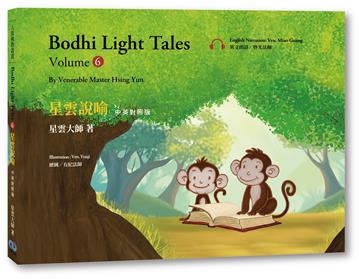
圖書名稱:星雲說喻 中英對照版(6)Bodhi Light Tales:Volume 6(附QR Code線上音檔)
觸動心靈的寓言故事
小時候,故事書經常是陪伴我們長大的忠實良伴,在成長的過程中引領著我們。好的故事會觸動心靈,並且啟發我們要讓自己和周遭的世界變得更好。故事,也會形塑我們的價值觀,而我們最終成為什麼樣的人將取決於這些價值觀。
星雲大師著《星雲說喻 中英對照版》一共六冊,讓讀者透過閱讀生動有趣的故事,探索並領悟佛陀深奧的教法和人間佛教理念。故事圍繞著佛教的「六度波羅蜜」開展,也就是菩薩道的「六度」精神:布施、持戒、忍辱、精進、禪定和般若。每篇故事以一則智慧法語作為總結,引導讀者省思個中寓意。這些故事如同一面明鏡,帶著我們檢視生活,思維如何將那永恆不朽的佛法應用在生活。
第六冊收錄十五篇以六度波羅蜜中的「般若」為主題的短篇故事。這是一套適合所有年齡層讀者的故事選集,本套書亦提供中英詞彙表,雙語讀者能更好理解每則故事的精髓。
期許《星雲說喻 中英對照版》能帶領讀者探索故事中無窮的慈悲、智慧與布施精神,照亮生命的道路。
Since our earliest days, stories have been faithful companions, guiding us through life’s journey. The power of a good story lies in its ability to touch our hearts, inspiring us to grow and bring positive change to ourselves and the world around us. Stories shape our perspective, and in turn, our perspective shapes who we become.
Introducing Bodhi Light Tales by Venerable Master Hsing Yun, a monumental 6-volume set available in both English and Chinese. This enchanting collection invites readers to explore the profound teachings of the Buddha and the principles of Humanistic Buddhism. Stories centered around the Six Paramitas, also known as the Six Perfections: Generosity, Precept, Patience, Diligence, Meditative Concentration, and Wisdom. Each tale in this collection is accompanied by words of wisdom, offering profound insights that encourage reflection upon the moral lessons conveyed. These stories provide a mirror through which we can examine our own lives and contemplate how these timeless teachings can be applied to our daily existence.
In this sixth volume, you will immerse yourself in the realm of On Wisdom through a treasury of 15 short stories. Designed to captivate readers of all ages, this book also includes vocabulary lists to assist bilingual readers in fully understanding the essence of each tale.
May Bodhi Light Tales illuminate your path as you explore the boundless possibilities of compassion, understanding, and generosity.
★中英對照 全彩圖文 故事隨身聽 親子教育最佳教材
作者簡介:
星雲大師,江蘇江都人,一九二七年生,十二歲禮志開上人為師,祖庭江蘇宜興大覺寺,傳臨濟正宗第四十八世。一九四七年於焦山佛學院畢業,期間曾參學金山、棲霞等禪淨律學諸大叢林,歷經宗下、教下、律下等完整的佛門教育。後應聘為白塔國小校長,主編《怒濤》月刊。
一九四九年春來臺,主編《人生雜誌》、《今日佛教》、《覺世》等佛教刊物。
一九六七年創建佛光山,樹立「以文化弘揚佛法,以教育培養人才,以慈善福利社會,以共修淨化人心」四大弘法宗旨,以「人間佛教」為宗風,先後在世界各地創建三百餘所道場,創辦多所美術館、圖書館、出版社、書局、人間福報、雲水醫院,興辦佛教學院十六所,中學三所,及西來、南華、佛光、南天、光明五所大學,及人間佛教研究院。
一九七O年後,相繼成立「大慈育幼院」、「仁愛之家」,收容撫育無依之幼童、老人及從事急難救濟等福利社會。一九九一年成立「國際佛光會」,被推為總會會長,實踐「佛光普照三千界,法水長流五大洲」的理想。
一九七七年編纂《佛光大藏經》、《佛光大辭典》,《中國佛教經典寶藏精選白話版》等。二O一七年出版《星雲大師全集》,共三百六十五冊,三千餘萬字,有系統地闡述人間佛教的思想、學說、理論,以及實踐結果。
二O二三年,大師住世緣盡,淨業圓滿,享耆壽九十七,被奉為佛光堂上第一代開山祖師,留遺偈:「心懷度眾慈悲願,身似法海不繫舟, 問我一生何所求,平安幸福照五洲」。
Biography of Venerable Master Hsing Yun
Venerable Master Hsing Yun was born in 1927 in Jiangdu, Jiangsu Province, China. At the age of 12, he was tonsured by Venerable Master Zhikai in Qixia Temple, Nanjing, with Dajue Temple in Yixing, Jiangsu, as his ancestral temple. He later became the 48th-generation lineage holder of the Linji Chan school. In 1947, he graduated from Jiaoshan Buddhist College, and also trained at various Chan, Pure Land, and Vinaya monasteries, including Jinshan, Qixia, and others. He received a comprehensive Buddhist education in the lineage, teachings, and Vinaya disciplines. Later on, the Venerable Master was invited to serve as the principal of Baita Elementary School, and also the editor-in-chief of Raging Billows Monthly.
In the spring of 1949, the Venerable Master arrived in Taiwan. He served as the editor-in-chief of Human Life Magazine, Buddhism Today Magazine, and Awakening the World.
In 1967, the Venerable Master founded the Fo Guang Shan Buddhist Order, with the Four Objectives: to propagate the Dharma through culture; to foster talents through education; to benefit society through charity, and to purify people’s minds through spiritual cultivation. Guided by the principles of Humanistic Buddhism, he went on to establish over three hundred temples worldwide. Additionally, he oversaw the creation of various art galleries, libraries, publishing companies, bookstores, the Merit Times newspaper, and the Cloud and Water Mobile Clinic. Furthermore, he established sixteen Buddhist colleges and founded three high schools and five universities, including the University of the West in the United States, Fo Guang University in Taiwan, Nanhua University in Taiwan, Nan Tien Institute in Australia, and Guang Ming College in the Philippines. Notably, he also established the Institute of Humanistic Buddhism.
In 1970, the Venerable Master established Da Ci Children’s Home and the Lanyang Ren Ai Senior Citizen’s Home, providing shelter and care for vulnerable young children, and elderly individuals. He also actively engaged in emergency relief efforts, contributing to the fostering of a welfare society. Then, in 1991, he founded the Buddha’s Light International Association (BLIA) and was elected as the President of the World Headquarters. Under his guidance, the association’s mission expanded, symbolized by the saying, “the Buddha’s Light shining over three thousand realms, and the Dharma water flowing continuously through the five continents.
In 1977, the Fo Guang Buddhist Canon, the Fo Guang Dictionary of Buddhism, and the 132-volume Selected Chinese Buddhist Texts in Modern Language were compiled. In 2017, the Complete Works of Venerable Master Hsing Yun was published, comprising 365 volumes with over 30 million words. In 2023, it was supplemented to 395 volumes, exceeding 40 million words, systematically expounding the ideologies, teachings, theories, and practical outcomes of Humanistic Buddhism.
In 2023, the Venerable Master peacefully passed away, his virtuous deeds complete and fulfilled, having reached the age of ninety-seven. He was revered as the Founding Master of the Fo Guang Order, and he left behind this poignant poem:
A mind with the compassionate vow to deliver sentient beings,
A body like a boat on the Dharma ocean, unbound.
Should you ask what I have achieved in this lifetime?
Peace and happiness shine upon the five continents.
章節試閱
Baby Monkey Waters Flowers 猴子澆花
無論修行也好,做人也好,佛教一再強調要有智慧,凡事講求中道。所謂「中道」即不偏不倚,也就是正道。然而,如何才能掌握中道呢?就需要智慧來引導,因此智慧對我們而言,實在很重要。
經典裡有一個故事說到:在國王的花園裡,住著一個猴子家庭,成員有爸爸、媽媽和孩子。另外,花園裡還有一個專門負責照顧花朵的園丁。
由於園丁跟猴子們相處得很好,所以有時候猴子就會幫忙園丁,做些拔草、澆水的工作。
有一天,王宮外面的廣場傳來演戲的聲音,園丁聽到了,實在好心動,很想跑去看戲。可...
無論修行也好,做人也好,佛教一再強調要有智慧,凡事講求中道。所謂「中道」即不偏不倚,也就是正道。然而,如何才能掌握中道呢?就需要智慧來引導,因此智慧對我們而言,實在很重要。
經典裡有一個故事說到:在國王的花園裡,住著一個猴子家庭,成員有爸爸、媽媽和孩子。另外,花園裡還有一個專門負責照顧花朵的園丁。
由於園丁跟猴子們相處得很好,所以有時候猴子就會幫忙園丁,做些拔草、澆水的工作。
有一天,王宮外面的廣場傳來演戲的聲音,園丁聽到了,實在好心動,很想跑去看戲。可...
顯示全部內容
作者序
《星雲說喻 中英對照版》,是一套引人入勝的六冊選集,收編了九十五篇由敬愛的星雲大師講說,以六度波羅蜜為主題的故事。這些故事最初收錄在《星雲說喻》,大師喜歡在演講中穿插生動有趣的故事,以傳遞人間佛教思想與實踐的精髓。
2019年,我們首次將《星雲說喻》的內容翻譯成有聲故事書,並於 Anchor 播客平台推出「菩提心燈」系列故事 (Bodhi Light Tales Podcast)。這些年,我們一直期待著將這些故事結集成冊,如今因緣條件具足,並以中英雙語圖書的形式呈現。為了讓來自各年齡層、宗教、信仰,以及文化的讀者皆能與故事產生共鳴,我...
2019年,我們首次將《星雲說喻》的內容翻譯成有聲故事書,並於 Anchor 播客平台推出「菩提心燈」系列故事 (Bodhi Light Tales Podcast)。這些年,我們一直期待著將這些故事結集成冊,如今因緣條件具足,並以中英雙語圖書的形式呈現。為了讓來自各年齡層、宗教、信仰,以及文化的讀者皆能與故事產生共鳴,我...
顯示全部內容
目錄
Bodhi Light Tales:Volume 6
Biography of Venerable Master Hsing Yun 星雲大師簡介
Editor’s Introduction 編者序
How to Use This Book 如何使用本書
Stories
01. Better off Blind 不如做瞎子
02. Bubble Mountain 泡沫山的故事
03. Baby Monkey Waters Flowers 猴子澆花
04. Let Go and Be Saved 放下,得救
05. Deception of Our Senses 師父背女人
06. Nothing to Give 沒有東西
07. Three Times Eight 三八二十三
08. Living with Contentment 適合的人生
09. Nudist Country 裸人國
10. Death and Life 生...
Biography of Venerable Master Hsing Yun 星雲大師簡介
Editor’s Introduction 編者序
How to Use This Book 如何使用本書
Stories
01. Better off Blind 不如做瞎子
02. Bubble Mountain 泡沫山的故事
03. Baby Monkey Waters Flowers 猴子澆花
04. Let Go and Be Saved 放下,得救
05. Deception of Our Senses 師父背女人
06. Nothing to Give 沒有東西
07. Three Times Eight 三八二十三
08. Living with Contentment 適合的人生
09. Nudist Country 裸人國
10. Death and Life 生...
顯示全部內容
|