| FindBook |
有 1 項符合
Building Successful Partner Channels的圖書 |
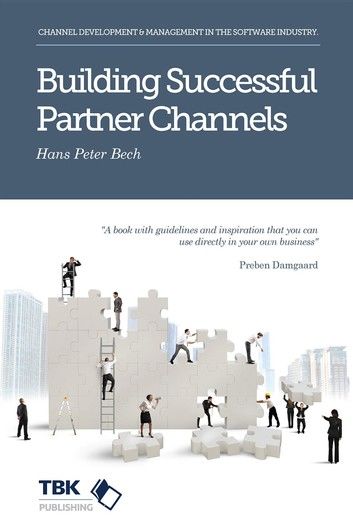 |
Building Successful Partner Channels 作者:Hans Peter Bech 出版社:TBK Consult ApS 出版日期:2015-04-01 語言:英文 |
 樂天KOBO
| 圖書館借閱 |
| 國家圖書館 | 全國圖書書目資訊網 | 國立公共資訊圖書館 | 電子書服務平台 | MetaCat 跨館整合查詢 |
| 臺北市立圖書館 | 新北市立圖書館 | 基隆市公共圖書館 | 桃園市立圖書館 | 新竹縣公共圖書館 |
| 苗栗縣立圖書館 | 臺中市立圖書館 | 彰化縣公共圖書館 | 南投縣文化局 | 雲林縣公共圖書館 |
| 嘉義縣圖書館 | 臺南市立圖書館 | 高雄市立圖書館 | 屏東縣公共圖書館 | 宜蘭縣公共圖書館 |
| 花蓮縣文化局 | 臺東縣文化處 |
|
|
The book applies the business model and business model environment frameworks developed by Alexander Osterwalder and Yves Pigneur and concludes that taking the indirect route to market adds an additional layer of complexity to our business model as we leave the control of finding, winning, making, keeping and growing happy customers to third parties.
The book explains that the direct and the indirect go-to-market approach are not options we can choose freely between, independent of the nature of our business model and business model environments and it discusses when the indirect go-to-market approach is applicable and advantageous and when it is not. The book concludes that taking the indirect route to market requires that the channel is an integrated element of our product offering and value proposition.
The indirect route to global market leadership requires developing and maintaining a channel partner program and the book lists all the elements of this program including the critical channel partner P&L model. The book concludes that our partner program will change substantially as we move from early stage channel building to the mature mode where most of our revenue comes from existing channel partners.
The book describes the process for channel partner recruitment, and concludes that the initial process is very similar to the process of hiring top performing sales people. However, where we pay staff to perform their duties from the day they join, channels partners will have to make substantial investments before they reap the benefits of the cooperation. Channel partner recruitment is therefore initially a long process requiring substantial investments.
The dynamics of channel partner recruitment changes as we move from the early mode channel development stage to the mature stage and the book recommends that we should recruit as many channel partners as we possibly can. We then let them demonstrate where they belong in the channel pyramid classifying channel partners and the book discusses how we should manage each group.
A full chapter is devoted to discuss adopting the indirect channel approach at a later stage after having applied a direct approach first, introduces some simple sanity checks to verify if switching is feasible and explains how this switch can be accomplished.
|