| FindBook |
有 1 項符合
JUST SO STORIES - 12 illustrated Children's Stories of how things came to be的圖書 |
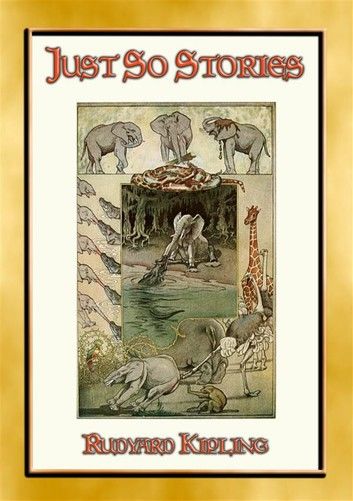 |
JUST SO STORIES - 12 illustrated Children's Stories of how things came to be 作者:Rudyard Kipling,Illustrated by Joseph. M Gleeson 出版社:Abela Publishing 出版日期:2018-05-17 語言:英文 |
 樂天KOBO
| 圖書館借閱 |
| 國家圖書館 | 全國圖書書目資訊網 | 國立公共資訊圖書館 | 電子書服務平台 | MetaCat 跨館整合查詢 |
| 臺北市立圖書館 | 新北市立圖書館 | 基隆市公共圖書館 | 桃園市立圖書館 | 新竹縣公共圖書館 |
| 苗栗縣立圖書館 | 臺中市立圖書館 | 彰化縣公共圖書館 | 南投縣文化局 | 雲林縣公共圖書館 |
| 嘉義縣圖書館 | 臺南市立圖書館 | 高雄市立圖書館 | 屏東縣公共圖書館 | 宜蘭縣公共圖書館 |
| 花蓮縣文化局 | 臺東縣文化處 |
|
|
A GREAT READ for children!
Herein you will find 12 JUST SO tales from Rudyard Kipling author of THE JUNGLE BOOK. Just So Stories are considered some of Kipling's best works. They give fantastical explanations for various phenomena. Here you will find tales like The Butterfly That Stamped, How The Leopard Got It’s Spots, How The Whale Got His Throat, How The Camel Got His Hump, How The Alphabet Was Made and many, more which will keep even the youngest minds occupied for hours. Don’t be surprised if your young charges come to you with questions after reading these stories, for these stories will challenge all inquisitive young minds.
The 14 color plates and 26 BnW illustrations by Joseph. M Gleeson add stimulus to the stories as do the illustrated drop capitals in every story.
These are mainly “How” stories about animals from India, Africa and Australia, plus a few tales that belong to all Nations, all with an essential moral to teach children. These twelve stories were gathered and published by Kipling over a century ago and the morals are just as applicable today as they were then.
A WORD OF WARNING: by today’s standards there are some racial stereotypical labels used. In 1912 these had a more innocent and naive meaning, than if used them today. However, we have stayed true to the original text and left these in situ. We ask you to be aware of these and to not take offence if and when you come across these.
10% of the net profit from the sale of this book will be donated to OLIVER'S HOUSE, a non profit organisation in Benoni, South Africa focusing on childcare and education.
KEYWORDS/TAGS: Just So Stories, Tales from India, Africa, Australia, South America, fairy tales, folklore, myths, legends, children’s stories, childrens stories, bygone era, fairydom, ethereal, fairy land, classic stories, children’s bedtime stories, happy place, happiness, Elephant, Rudyard Kipling, Beginning of the Armadillos, Tortoise, Painted Jaguar, creature, woods, Mother Jaguar, Butterfly that Stamped, King Solomon, butterfly wives, keeping up appearances, spouse, Cat that Walked by Himself, animals, Wet Wild Woods, domesticate, wild animals, Crab that Played with the Sea, Eldest Magician, Mankind, flooding, Pau Amma, monster crab, Sing-Song of Old Man Kangaroo, fast on land, Elephant's Child, How elephant got its trunk, Elephant’s Child, new feature, How the Whale Got His Throat, whale eats a man, crafty , escape, How Camel Got His Hump, camel refuses to work, humph, Dijnn, punishment for laziness, How the First Letter Was Written, drawing, misunderstanding, friendship, How the Alphabet Was Made, Neolithic man, Tegumai Bopsulai, fishing, Taffy, message, Tegumai, language, pictogram, evolve, system, familiar objects, facial expressions, simplify, simplification, letters of the alphabet, how the Leopard Got His Spots, Ethiopian hunter, change, colour, color of skin, hunting, animals, High Veld, Veldt, South Africa, How the Rhinoceros Got His Skin, Extreme, itching, wrinkles, rhino, skin
|