| FindBook |
有 1 項符合
Energy Demand in Industry的圖書 |
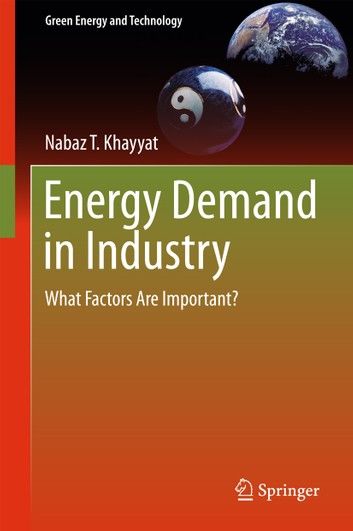 |
Energy Demand in Industry 作者:Nabaz T Khayyat 出版社:Springer Netherlands 出版日期:2015-08-07 語言:英文 |
 樂天KOBO
| 圖書館借閱 |
| 國家圖書館 | 全國圖書書目資訊網 | 國立公共資訊圖書館 | 電子書服務平台 | MetaCat 跨館整合查詢 |
| 臺北市立圖書館 | 新北市立圖書館 | 基隆市公共圖書館 | 桃園市立圖書館 | 新竹縣公共圖書館 |
| 苗栗縣立圖書館 | 臺中市立圖書館 | 彰化縣公共圖書館 | 南投縣文化局 | 雲林縣公共圖書館 |
| 嘉義縣圖書館 | 臺南市立圖書館 | 高雄市立圖書館 | 屏東縣公共圖書館 | 宜蘭縣公共圖書館 |
| 花蓮縣文化局 | 臺東縣文化處 |
|
|
The book presents a stochastic analysis based on production risk and application of this method in the industrial sector under production risk where energy use is an input factor. Using South Korea as a case study, the book empirically models energy demand at the industrial level and analyzes the results to identify key determinants of energy demand, productions level, productions risk and energy usage efficiency.
Particular attention is paid to the factors that enhance production risk or increase variations in energy input during production. A dynamic panel model is specified and applied to 25 Korean industrial sectors over the period 1970-2007. The determinants of energy usage are identified and their effects in the form of elasticities of energy usage are estimated. In addition the structural changes in the energy demand pattern are explored. Stochastic production technology is applied to create two primary models: A production model where the energy usage is a determinant of output and an energy demand model based on an inverted factor demand model where demand is a key determinant of the level of energy usage.
The findings reveal that: First, there are large variations in the degree of overuse or inefficiency in energy usage among the individual industries and over time; second, ICT (information and communication technology) capital and labor are substituting energy; third, ICT capital and value added services are two input factors decreasing the variability of energy demand while non-ICT capital, material and labor are increasing the variability of energy demand. Finally, the results suggest that technical progress contributes more to the increase of mean of energy demand than to the reduction of the level of risk. An emerging recommendation is that industries increase the level of ICT capital and digitalization and invest more in R&D activities and value added services to reduce the uncertainty related to their demand for energy. This study forms the structure of the demand for energy under stochastic production risk for the South Korean industrial sector. Public research programs aimed at the industrial sector should be concerned about both mean and risk properties in research on new technologies and in the investigation of possible alternative energy inputs.
This book describes the state of the art in energy usage analysis and production risk, applying factor requirement methodology. It will be of use as a main or supplementary text in the teaching of advanced graduate courses but also as a reference for those working on empirically advanced research. The book is an important addition to the existing literature on industrial development, with its focus on energy as a core production input.
|