| FindBook |
有 1 項符合
Asian Economic Systems的圖書 |
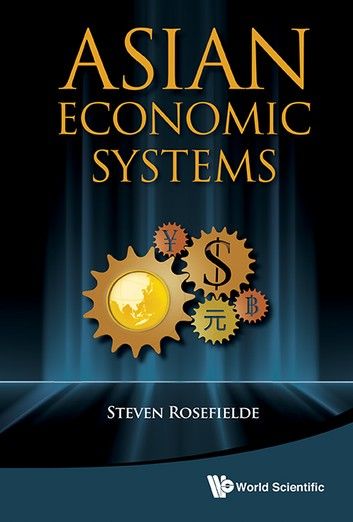 |
Asian Economic Systems 作者:Steven Rosefielde 出版社:World Scientific Publishing Company 出版日期:2013-03-22 語言:英文 |
 樂天KOBO
| 圖書館借閱 |
| 國家圖書館 | 全國圖書書目資訊網 | 國立公共資訊圖書館 | 電子書服務平台 | MetaCat 跨館整合查詢 |
| 臺北市立圖書館 | 新北市立圖書館 | 基隆市公共圖書館 | 桃園市立圖書館 | 新竹縣公共圖書館 |
| 苗栗縣立圖書館 | 臺中市立圖書館 | 彰化縣公共圖書館 | 南投縣文化局 | 雲林縣公共圖書館 |
| 嘉義縣圖書館 | 臺南市立圖書館 | 高雄市立圖書館 | 屏東縣公共圖書館 | 宜蘭縣公共圖書館 |
| 花蓮縣文化局 | 臺東縣文化處 |
|
|
Asian Economic Systems provides readers with a crisp analytic framework, concepts and narrative highlighting contemporary Asia's systemic diversity. The framework facilitates insightful comparison with the western neoclassical ideal. This method allows students to easily appreciate the special virtues of various Asian economic systems, and compare them with those offered in the west. This objective is buttressed with background material on Asian economic history where appropriate, together with basic data on Asian and global economic performance to help students integrate concepts with experience.
The approach provides an objective platform for discussing Asia's place and future in the new global order. It makes it clear that there is no universally best economic system. There are a variety of good systems and nations should choose the system that best suits their cultural heritage, values and aspirations.
The approach informs discussions about the wisdom of forming regional free trade zones, economic communities (like ASEAN), and unions (analogous to the European Union), as well as forging a one-world system of economic governance.
Also, Asian Economic Systems has a secondary goal. It provides the tools needed for training students in how to apply microeconomic, macroeconomic and financial principles to practical issues of systems and policies.
The book focuses on East and Southeast Asia. The term Asia is used as a shorthand for the cultural region dominated historically by Confucian kinship networks, Japanese communalism and Theravada Buddhism, and more recently by Marxist–Leninist communism. It excludes the Middle East, Central Asia, the Himalayan states, South Asia, Malaysia, Indonesia, the Philippines, Russia and America's Asia Pacific possessions.
The book identifies and elaborates four rival market systems in contemporary Asia each with its own distinctive performance characteristics, potentials and humanist properties: (1) communist (China, Vietnam, Laos and Cambodia), (2) Confucian (Taiwan, Singapore, Hong Kong, and South Korea), (3) communal (Japan), and (4) Theravada Buddhist (Thailand and Sri Lanka). Their comparative merit is partly obscured by differences in stages of economic development, epochal, and conjunctural factors, but their special positive and negative attributes are unmistakable, and are compared with North Korea's communist command system which is the region's fifth core alternative to democratic free enterprise.
|