| FindBook |
有 1 項符合
The Global Economy in Transition的圖書 |
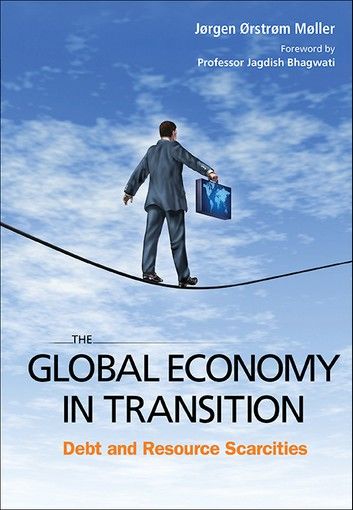 |
Global Economy In Transition, The: Debt And Resource Scarcities 作者:Joergen Oerstroem Moeller 出版社:World Scientific Publishing Company 出版日期:2013-06-28 語言:英文 |
 樂天KOBO
| 圖書館借閱 |
| 國家圖書館 | 全國圖書書目資訊網 | 國立公共資訊圖書館 | 電子書服務平台 | MetaCat 跨館整合查詢 |
| 臺北市立圖書館 | 新北市立圖書館 | 基隆市公共圖書館 | 桃園市立圖書館 | 新竹縣公共圖書館 |
| 苗栗縣立圖書館 | 臺中市立圖書館 | 彰化縣公共圖書館 | 南投縣文化局 | 雲林縣公共圖書館 |
| 嘉義縣圖書館 | 臺南市立圖書館 | 高雄市立圖書館 | 屏東縣公共圖書館 | 宜蘭縣公共圖書館 |
| 花蓮縣文化局 | 臺東縣文化處 |
|
|
This book is a collection of essays written by Ambassador, Professor Jørgen Ørstrøm Møller from the middle of 2009 to end of 2012, commenting on global economic and political events, which reflect Moeller's judgment and evaluation on these issues.
Readers get an overview to the collection of essays and the worldview they represent in an introductory chapter weaving together strands of economics, politics, and societal issues. Møller goes a step further by sketching up a picture of how a future economic model and political system may look — forged by debt, scarcities, economic integration, and the rise of Asia.
Part I deals with global systems and possible long trends shaping the future over the coming decades, as the current political system and economic model, having run their course, come to an end.
Part II discusses how the era of scarcities will change economic behaviour in terms of economic models.
Part III looks into the global debt problem, which confines the world to low growth over one or two decades as the world tries to get rid of the debt burden.
Part IV forms an analysis of what has happened in the Euro-zone and how the global debt crisis has compelled the Europeans to take the next steps in integration and address the shortcomings and flaws in the original treaty from 1992.
Part V turns to Asia and its future in the global economy. It concentrates on Asian integration and how the Asian countries will fare in the future under much changed circumstances compared to how things looked when the Asian adventure started some 30–40 years ago.
At the end, readers will find a short post-scriptum with some of Moeller's afterthoughts on the important issues discussed throughout the book.
|