六六三十六,數中有術,術中有數。陰陽燮理,機在其中。機不可設,設則不中。
六六三十六,數中有術,術中有數。陰陽燮理,機在其中。機不可設,設則不中。
Six times six yields thirty-six: Within number resides strategy, and within strategy, number. Yin and Yang unfold in dynamic balance; the subtle pivot lies therein. The strategic moment cannot be fixed in advance; once predetermined, it loses its precision.
📘 Chinese Idiom
六六三十六,數中有術,術中有數。陰陽燮理,機在其中。機不可設,設則不中。
📘 Literal Meaning
The Thirty-Six Stratagems unite numerical order and strategic art. Within numbers reside methods, and within methods, numbers. The harmonization of yin and yang governs all. Strategic opening cannot be manufactured; when artificially arranged, it fails to strike its mark.
📘 Figurative Meaning
This idiom emphasizes the delicate balance between structure and improvisation. Even within careful calculations and strategic planning, there must be room for flexibility and adaptation. It cautions against rigid, overdetermined planning and instead advocates responding attentively to shifting conditions, much like attunement to the dynamic interplay of yin and yang.
📘 Strategic Insight
The maxim teaches that true mastery lies not in fixed formulas but in sensitivity to timing ( 機 / jī ), the capacity to adapt one’s method ( 術 / shù ) to circumstance, and an awareness of unseen forces ( 陰陽 / yīnyáng) that shape outcomes. It serves as a guiding principle for all Thirty-Six Stratagems. Strategy must remain responsive and alive, not static or mechanical.
📘 Modern Interpretation
六六三十六:每一計都蘊含著數理規律,每一術又都依循策略原則。陰陽調和、事理相生,機巧隱藏其中。計謀的巧妙不應被刻意設計,設計過頭反而容易失效。
六六三十六:每一计都蕴含着数理规律,每一术又都遵循策略原则。阴阳调和、事理相生,机巧隐藏其中。计谋的巧妙不应被刻意设计,设计过头反而容易失效。
Liù liù sān shí liù: Měi yī jì dōu yùnhán zhe shùlǐ guīlǜ, měi yī shù yòu dōu zūnxún cèlüè yuánzé. Yīnyáng tiáohé, shì lǐ xiāngshēng, jīqiǎo yǐncáng qízhōng. Jìmóu de qiǎomiào bù yīng bèi kèyì shèjì, shèjì guòtóu fǎn’ér róngyì shīxiào.
“Thirty-Six Stratagems” Overview: Each stratagem contains underlying numerical and logical principles, and every tactic follows strategic rules. The harmony of yin and yang, the natural interplay of forces, hides cleverness within. The subtlety of a plan should not be forced; over-designing a strategy often leads to failure.
Ex amp l e S e n t e n c e
繁 在面對困境時,記住「機不可設,設則不中」,要靈活應對,不能死板。
简 在面对困境时,记住“机不可设,设则不中”,要灵活应对,不能死板。
拼 Zài miàn duì kùn jìng shí, jì zhù “Jī bù kě shè, shè zé bú zhòng”, yào líng huó yìng duì, bù néng sǐ bǎn.
EN When facing challenges, remember the saying: “Opportunities cannot be forced; if contrived, they will miss their mark.” Respond flexibly and avoid rigid thinking.
Ex t e n d e d R e a d i n g P r a c t i c e
繁 戰國時期,兵法與謀略盛行,各國將領都重視兵陣與計謀。傳說中有位智將,他善於佈陣,每次出戰都能隨機應變,讓敵人難以預測。敵軍雖知其大致行動,卻無法掌握具體策略,常常陷入被動。這位將領常說:「六六三十六,數中有術,術中有數。」意思是軍陣看似繁複的數字排列,其實每一步都暗藏計謀;而計謀之中又可以用數理精準計算,讓敵人無法輕易破解。他在佈陣時,先計算兵力配置、攻守順序、地形優劣,再設置誘敵陷阱。戰場上,他能隨時改變陣法,敵軍一旦行動,便陷入預設的陷阱中。一次,他面對強敵,敵軍以人數優勢正面壓境。他先在正面佯攻,實際上暗中佈置迂迴路線,兵力分配巧妙,使敵人以為可以全力衝鋒。結果, 敵軍陷入計中計,被包圍,最終大敗而退。這就是「六六三十六」的智慧:看似複雜的數字和布陣,其實暗藏策略;策略之中,又依靠精準的計算,使敵人無所適從。
简 战国时期,兵法与谋略盛行,各国将领都重视兵阵与计谋。传说中有位智将,他善于佈阵,每次出战都能随机应变,让敌人难以预测。敌军虽知其大致行动,却无法掌握具体策略,常常陷入被动。这位将领常说:“六六三十六,数中有术,术中有数。”意思是军阵看似繁複的数字排列,其实每一步都暗藏计谋;而计谋之中又可以用数理精准计算,让敌人无法轻易破解。他在布阵时,先计算兵力配置、攻守顺序、地形优劣,再设置诱敌陷阱。战场上,他能随时改变阵法,敌军一旦行动,便陷入预设的陷阱中。一次,他面对强敌,敌军以人数优势正面压境。他先在正面佯攻,实际上暗中布置迂迴路线,兵力分配巧妙,使敌人以为可以全力冲锋。结果, 敌军陷入计中计,被包围,最终大败而退。这就是“六六三十六”的智慧:看似複杂的数字和布阵,其实暗藏策略;策略之中,又依靠精准的计算,使敌人无所适从。
EN In the Warring States period, the arts of war and strategy flourished. Generals in every state studied formations and schemes with care, knowing that victory depended not only on operational capacity, but on arrangement. Among them, it is said, there was a commander of uncommon intelligence. He had a gift for deployment. Each time he entered battle, he adapted to shifting conditions with such ease that the enemy could not predict his next move. They might glimpse his general direction, but the design itself eluded them, and so they were often left reacting, never acting. This general was fond of saying: “Six times six makes thirty-six; within numbers there are methods, and within methods, numbers.” By this he meant that what appears to be a mere pattern of troops, an orderly arrangement of figures, is in truth a web of intention. Each position conceals a purpose; each movement answers a calculation. Strategy, in his hands, was not guesswork but measured design, precise enough to confound any attempt at deciphering. Before setting his formations, he would calculate the distribution of forces, the sequence of attack and defense, the advantages and liabilities of terrain. Only then would he lay his snares. On the field, he altered his formations as the moment required. The instant the enemy committed to action, they found themselves already within the lines of a plan they had not seen. Once, he faced a powerful opponent who advanced in overwhelming numbers. He met them with a feigned attack at the front, while quietly arranging a circuitous route behind the lines. His troops were placed with such care that the enemy believed they could press forward without restraint. They charged. In doing so, they entered a design within a design, caught, surrounded, and undone. Such is the wisdom of “six times six makes thirty-six.” What seems to be complexity of number is, in fact, clarity of intention. Within the visible order lies the hidden plan; within the plan, exact calculation. And by this union of number and method, the enemy is left with no footing at all.
Mu l t i p l e C h o i c e Q u e s t i o n s
1. What is the main idea of the proverb “ 六六三十六,數中有術,術中有數” (Liù liù sān shí liù, shù zhōng y ǒu shù, shù zhōng y ǒu shù)?
A. Every number has a secret meaning.
B. Complex arrangements conceal strategy, and strategy relies on calculation.
C. The number 36 is lucky in battle.
D. Battles are won only by having more soldiers.
2. How did the Warring States general use this principle in battle?
A. By confusing his enemies with seemingly complex formations while hiding his real tactics.
B. By attacking the enemy head-on with full force.
C. By ignoring the terrain and relying only on luck.
D. By retreating whenever the enemy appeared.
3. What was the outcome when the enemy underestimated his stratagem?
A. The enemy easily defeated him.
B. His army became confused.
C. The enemy fell into traps and was repeatedly defeated.
D. The battle ended in a draw.
Answer Key:
1.B
2.A
3.C
| FindBook |
有 6 項符合
三十六計:語言、策略與決策思維高階華語學習教材的圖書 |
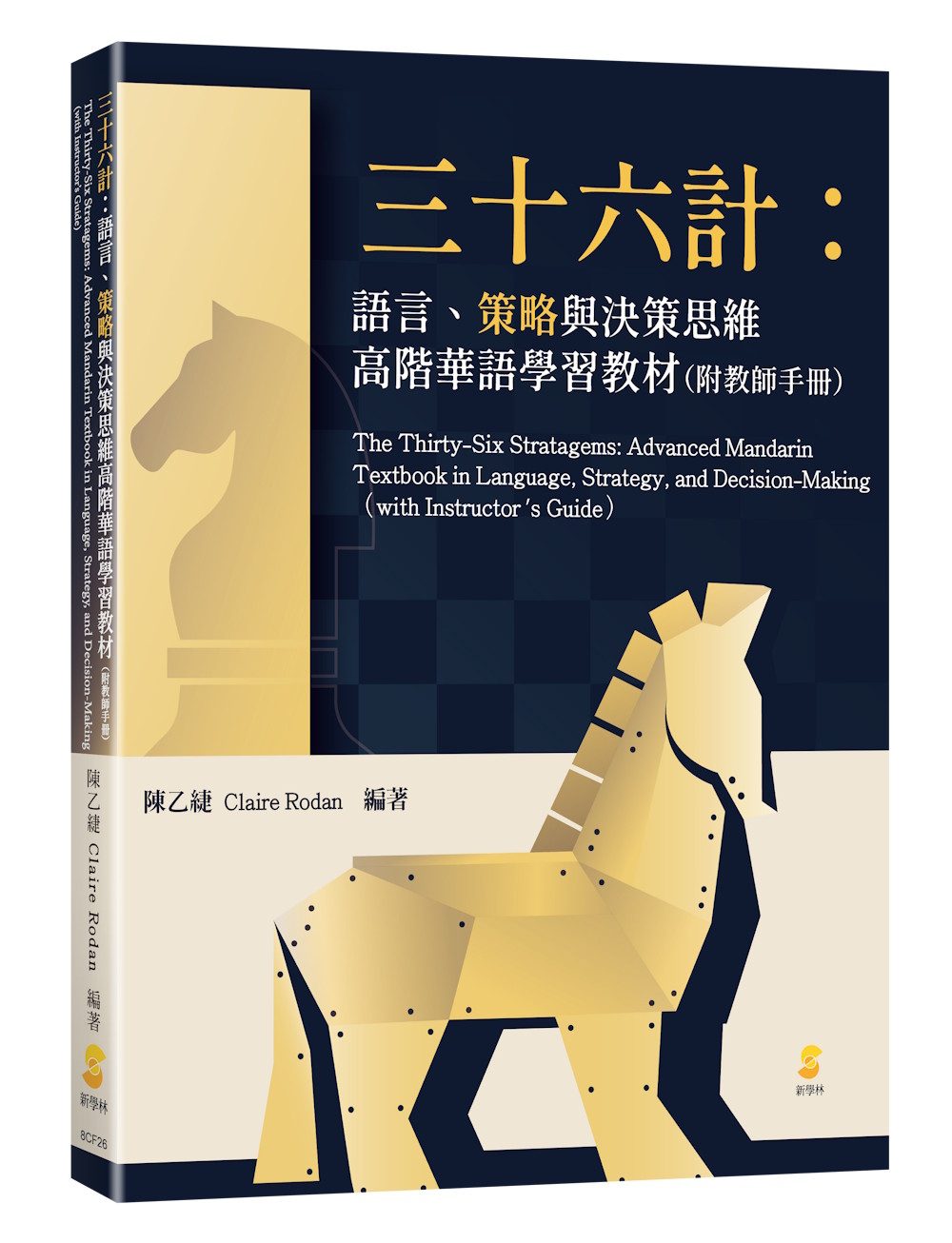 |
三十六計: 語言、策略與決策思維高階華語學習教材 (附教師手冊) 作者:陳乙緁 出版社:新學林出版股份有限公司 出版日期:2026-07-03 |
| 圖書選購 |
| 型式 | 價格 | 供應商 | 所屬目錄 | $ 467 |
 誠品網路書店 誠品網路書店 |
中文 |
$ 495 |
 五南文化廣場網路書店 五南文化廣場網路書店 |
社會人文 |
$ 511 |
 TAAZE 讀冊生活 TAAZE 讀冊生活 |
中文書 |
$ 512 |
 iRead灰熊愛讀書 iRead灰熊愛讀書 |
高等教育 |
$ 522 |
 金石堂 KingStone 金石堂 KingStone |
教育學群 |
$ 522 |
 三民網路書店 三民網路書店 |
社會人文 |
|---|
| 圖書館借閱 |
| 國家圖書館 | 全國圖書書目資訊網 | 國立公共資訊圖書館 | 電子書服務平台 | MetaCat 跨館整合查詢 |
| 臺北市立圖書館 | 新北市立圖書館 | 基隆市公共圖書館 | 桃園市立圖書館 | 新竹縣公共圖書館 |
| 苗栗縣立圖書館 | 臺中市立圖書館 | 彰化縣公共圖書館 | 南投縣文化局 | 雲林縣公共圖書館 |
| 嘉義縣圖書館 | 臺南市立圖書館 | 高雄市立圖書館 | 屏東縣公共圖書館 | 宜蘭縣公共圖書館 |
| 花蓮縣文化局 | 臺東縣文化處 |
|
|
圖書介紹 - 資料來源:TAAZE 讀冊生活 評分:
圖書名稱:三十六計:語言、策略與決策思維高階華語學習教材
--這不只是一本語言教材,更是一部理解中國思想、文化心理與戰略敘事的重要讀本!--
《三十六計》不僅是中國智慧與戰略思維的重要經典,更是一部濃縮語言、文化、心理與權力邏輯的思想文本。其價值不僅存在於戰術層面的應變技巧,更深植於中國文化中對局勢、關係、時機與人性的理解。
陳乙緁老師繼《孫子兵法:華語策略學習教材(附練習本)》一書後,再次以中國智慧與戰略思維原典《三十六計》為基礎,跨界結合「華語教學」、「策略思維」與「文化分析」,重新詮釋《三十六計》的語言結構、修辭邏輯與思想內涵,並進一步延伸至現代社會、國際關係、商業溝通與跨文化決策情境。
▍讀者透過此書將能深入瞭解:
• 每一計背後的隱喻思維與語言策略
• 中國文化中的間接性、權變性與情境判斷
• 策略如何透過語言、心理與敘事發揮作用
• 《三十六計》與《孫子兵法》之間的互補關係
• 華語語境中的文化邏輯與決策模式
▍書籍特色
•跨學科融合:將「古典戰略智慧」與「現代高階華語教學」完美結合,提升學習者的語言層次與思想深度。
•國際化視野:將古老計謀延伸至現代國際關係、外交、商業談判等實務情境,實用性極高。
•教學配套完整:本書貼心附帶《教學手冊》,方便華語教師進行課程設計、課堂互動與延伸討論。
▍本書適合:
• 高階華語學習者
• 華語教師與課程設計者
• 對中國文化、戰略思想與國際事務有興趣之讀者
• 商業、外交、跨文化溝通與政策研究相關人士
作者簡介:
陳乙緁博士(Dr. Claire Rodan)
比較文學與跨文化研究學者,研究領域涵蓋東亞與西方現代性、文學與電影研究、語言、文化與戰略思維。畢業於美國印第安納大學布魯明頓分校比較文學博士班,並曾於約翰霍普金斯大學高等國際研究學院(SAIS)進修國際關係。其研究融合文學、文化分析與跨領域方法,關注語言、敘事與文化邏輯如何形塑現代世界中的權力、認知與決策模式。長期從事高階語言教學、課程設計、策略文化研究與跨文化溝通教育,並致力於結合語言學習、人文思維與全球視野,推動華語教育的跨領域發展。著有《記憶零度C》、《寫給在Alaska的》、《孫子兵法:華語策略學習教材(附練習本)》,以及《三十六計:語言、策略與決策思維高階華語學習教材(附教師手冊)》等作品。
Dr. Claire Rodan is a scholar of comparative literature, language, and cross-cultural studies whose work bridges East Asian and Western modernity, literary and film studies, and strategic cultural analysis.
She received her PhD in Comparative Literature from Indiana University Bloomington and pursued additional studies in international relations at Johns Hopkins SAIS. Her interdisciplinary research explores the relationship between language, narrative, cultural logic, and strategic thinking in modern global contexts. Dr. Rodan has worked extensively in language education, curriculum design, intercultural communication, and strategic cultural studies.
She is the author of Memory Zero Celsius, To the One in Alaska, and The Art of War: Mandarin Strategy Learning Textbook (with Workbook), among other works.
章節試閱
六六三十六,數中有術,術中有數。陰陽燮理,機在其中。機不可設,設則不中。
六六三十六,數中有術,術中有數。陰陽燮理,機在其中。機不可設,設則不中。
Six times six yields thirty-six: Within number resides strategy, and within strategy, number. Yin and Yang unfold in dynamic balance; the subtle pivot lies therein. The strategic moment cannot be fixed in advance; once predetermined, it loses its precision.
📘 Chinese Idiom
六六三十六,數中有術,術中有數。陰陽燮理,機在其中。機不可設,設則不中。...
六六三十六,數中有術,術中有數。陰陽燮理,機在其中。機不可設,設則不中。
Six times six yields thirty-six: Within number resides strategy, and within strategy, number. Yin and Yang unfold in dynamic balance; the subtle pivot lies therein. The strategic moment cannot be fixed in advance; once predetermined, it loses its precision.
📘 Chinese Idiom
六六三十六,數中有術,術中有數。陰陽燮理,機在其中。機不可設,設則不中。...
顯示全部內容
作者序
The Thirty-Six Stratagems (三十六計) occupies a distinctive place within the Chinese strategic tradition. Unlike The Art of War, which presents a relatively coherent theoretical framework attributed to a single author, this text emerges from a cumulative lineage. It consists of brief formulations that condense recurring patterns of action observed across historical practice.
Early references to “thirty-six stratagems” function less as a fixed list than as a general expression for ingenuity in...
Early references to “thirty-six stratagems” function less as a fixed list than as a general expression for ingenuity in...
顯示全部內容
目錄
前言 PREFACE Ⅱ
介紹 INTRODUCTION Ⅲ
原文與卦象解析 CLASSICAL TEXT OF THE THIRTY-SIX STRATAGEMS Ⅴ
第一章◈勝戰計 Chapter I Winning Stratagems
第二章◈敵戰計 Chapter II Engagement Stratagems
第三章◈攻戰計 Chapter III Offensive Stratagems
第四章◈混戰計 Chapter IV Confusion Stratagems
第五章◈並戰計 Chapter V Consolidation Stratagems
第六章◈敗戰計 Chapter VI Survival Stratagems
第七章◈綜合複習練習 Chapter VII Comprehensive Review Practice
附錄:教師手冊 INSTRUCTOR’S GUIDE
介紹 INTRODUCTION Ⅲ
原文與卦象解析 CLASSICAL TEXT OF THE THIRTY-SIX STRATAGEMS Ⅴ
第一章◈勝戰計 Chapter I Winning Stratagems
第二章◈敵戰計 Chapter II Engagement Stratagems
第三章◈攻戰計 Chapter III Offensive Stratagems
第四章◈混戰計 Chapter IV Confusion Stratagems
第五章◈並戰計 Chapter V Consolidation Stratagems
第六章◈敗戰計 Chapter VI Survival Stratagems
第七章◈綜合複習練習 Chapter VII Comprehensive Review Practice
附錄:教師手冊 INSTRUCTOR’S GUIDE
顯示全部內容
|