| FindBook |
|
有 1 項符合
nyle monday的圖書 |
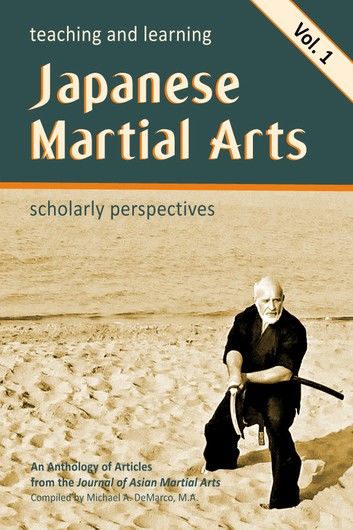 |
$ 329 電子書 | Teaching and Learning Japanese Martial Arts: Scholarly Perspectives Vol. 1
作者:Sally Harrison-Pepper,Nyle Monday,Lewis Hershey,H. Paul Varley,G. Cameron Hurst,Karl Friday,Wayne Van Horne,John Donohue,Kimberley Taylor 出版社:Via Media Publishing 出版日期:2017-03-11 語言:英文  樂天KOBO - 運動
- 來源網頁 樂天KOBO - 運動
- 來源網頁  看圖書介紹 看圖書介紹
|
|
|
In contrast to the overabundance of writings about martial arts that are often promotional and misinformative, there are rare works by scholars that are praiseworthy for their sincere, unbiased approach to writing. This is the very definition of “scholarly.” This two-volume anthology brings together the best scholarly works published in the Journal of Asian Martial Arts on the topic of teaching and learning Japanese martial arts.
In this volume, you’ll find ten chapters that dive deep into Japanese martial traditions, combining aspects of history and culture that explain how teaching methods developed and evolved. Dr. Harrison-Pepper’s chapter sets the tone with a focus on the fundamental student–teacher relationship that is responsible for the transmission of any art. She uses sociological and performance studies to analyze the martial art’s maturing process.
Understanding the teacher-student relationship is vital for all involved Japanese combative arts. Since Japan was ruled by a warrior class for nearly 700 years, it is necessary to understand the method by which warriors were educated through the ryuha system. Nyle Monday’s chapter presents this system.
Dr. Lewis Hershey explores the way in which a martial art can serve as a vehicle for non-discursive intercultural exchange in the teaching process. His chapter provides a discussion of the importance of embodying the feeling or aesthetic of a particular system as a way of knowing and understanding martial techniques.
The next three chapters were originally prepared for a meeting of the Association for Asian Studies. Dr. Paul Varley states that most who have written about martial arts practice are not trained scholars and their writings vary greatly in quality. He discusses the state of writing in this field and introduces the other authors.
Dr. Cameron Hurst discusses the characteristics of the martial arts that place them squarely into the category of “artistic ways” along with such familiar arts as Noh, the tea ceremony, and flower arranging. This reflects the “family headship” system of instruction to carry on the school’s traditions.
Dr. Karl Friday defines the term ryuha as “branch of the current,” representing the onward flow of a stream of thought; the branches betoken the splitting off that occurs as insights are passed from master to students, generation after generation. His chapter shows how ryuha exist to hand on knowledge with pattern practice (kata) being the core of transmission.
Is it warrior’s individualism that is prized in modern conformity-ridden Japanese culture, or is this an erroneous interpretation of the idealized warrior image by Westerners? In the next chapter, Dr. Wayne VanHorne’s research is persuading, showing that the ultimate goal of the training is to foster individuals to contribute to the betterment of the collective society with social responsibility.
In the following chapter, Dr. John Donohue analyzes the organizational components of traditional martial arts training and relates them to modern pedagogical theories. He concludes that the instructional theory embedded in martial arts training is at least as sophisticated and highly developed as are the techniques and philosophies of these systems. In the next chapter, he examines kata training as (1) a cultural activity that has been shaped by the structural characteristics of Japanese culture, and kata training as (2) a highly structured and effective mechanism for imparting technical skill in the martial arts.
Kim Taylor provides the final chapter dealing with “progressive instruction” found in many kata-based martial arts. Using iaido (sword drawing) as an example, he demonstrates how a set of practice can build—one kata after the other—from simple to more complex ideas and provide a deeper understanding of the entire set.
If you are interested in Japanese martial traditions, you will find much in these ten chapters that clarify why the arts are taught according to a longstanding tradition—and also why there have been evolutionary changes in the instructional methods. There is sound logic for the old traditions, as well as for the changes. The scholarly research presented in this anthology will improve a teacher’s way of instructing and help a student understand what to expect out of his or her studies.
|