Behold the stars above, bear witness to their infinitesimal yet penetrating radiance, and know this: that we are not the last of us.
For me, writing records the world and conserves memory; I write in order to sieve myself out from the muddle of the world, or wrest myself away from the crowd. My pen name is a form of protest against people who practically herd themselves towards some or another empty value or false worth.
—Qi-Deng Sheng, or Seventh-Rate Being
Qi-Deng Sheng was one of the most philosophically incisive creative writers on the Taiwan island in the 1960s and 70s, and one of the most controversial figures in local literary history. Criticism of his work is polarized, in a sort of tug of war between “collective consciousness” and “individual will” in the cultural landscape of a rapidly modernizing society.
As the hive mind buzzed, Qi-Deng Sheng tuned out and listened to his inner voice. As he explains in the above quotation, he regarded writing as a creative process that differentiated the ego from the group, and reality from falsehood. In other words, he wrote to build a sanctuary for his individuality. On the one hand, he was committed to conveying his personal beliefs through his works, rejecting vulgarity wherever he found it: in social groups, cultural trends, even literary critics. On the other hand, he was dedicated to highlighting the antagonism between self and society––to spotlighting the poor, deprived, embattled, isolated ego who was trying to strike a balance between being unique and understood.
The voices of protest in Qi-Deng Sheng’s stories belong to bit players such as Jaspers or Li Lung-ti. “Outsiders” like them are sensitive to the nuances of interpersonal interaction but remain steadfast in their beliefs. Through repeated exits and entries, between country and town, they decide where to settle down. In all their choices, they experience the conflict and struggle of them vs. me, how the world seems to me and what it actually might be. Qi-Deng Sheng regarded the girl with “black eyes” in “I Love Black Eyes” as his “ideal lover/goddess,” and she became his wisdom eye; he entrusted her with the task of guide. As he pursued an authentic life, she showed him true beauty; she kept him passionate, and encouraged him to keep fighting for spiritual freedom.
Reading Qi-Deng Sheng’s fiction is like plucking a string kept under tension by two opposing yet complementary forces: “the monad’s defiance of the group” and “the gonad’s alliance with the goddess.” These forces can be understood in terms of polyphony, as two themes that are harmonious yet dissonant, contradictory yet consistent—as twin motifs that lend profoundly lyrical colors to his oeuvre, demonstrating his inimitable value in the history of modern Taiwan literature.
“I wish you were dead, Tsing-tzu,” he thought. “I wish you’d been washed away by the water or trampled to death by the crowd. I will stand by my beliefs and wait for circumstances to change. Were I to sit in stonelike silence like a helpless pessimist or indulge in the mocking laughter of a heartless optimist, gleeful to see the world in peril, then I would be deprived of my existence.”
—“I love black eyes”
“From then on, whenever he came to Cold Lane, music never failed to trickle out of the cracks in the walls (like the light that glowed in that window). He went there every night, until one day he didn’t, the day his fellow city dwellers realized he’d disappeared. The suitcase was still there at the inn. ”
—“The long-jumper retires”
| FindBook |
|
有 1 項符合
qi-deng sheng的圖書 |
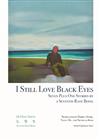 |
$ 273 ~ 350 | I Still Love Black Eyes: Seven Plus One Stories by a Seventh-Rate Being
作者:Qi-Deng Sheng / 譯者:Darryl Sterk、Nancy Du、Nicholas Koss 出版社:Lynx Publishing 出版日期:2026-01-30 語言:繁體書  共 3 筆 → 查價格、看圖書介紹 共 3 筆 → 查價格、看圖書介紹
|
|
|
內容簡介
作者介紹
Qi-Deng Sheng
Winner of National Award for Arts, Taiwan
One of the most important modernist writers of the era
Born Liu Wuxiong in 1939 in Miaoli, Taiwan, Qi-Deng Sheng graduated with a degree in art and later taught elementary school. He published his debut work in 1962 under the pen name Qi-Deng Sheng, meaning “seventh-rate being”, reflecting a certain self-deprecating humor. He is best known for the short story “I Love Black Eyes,” which drew both attention and criticism for what was perceived as the protagonist’s deviance. He won the National Awards for Art in 2010, which recognized him as “through deeply personal visions, he reveals profound truths and engages in philosophical reflections on the meaning of human existence. His writing fearlessly probes the subtleties of human nature and challenges rigid conventions with bold originality.”
|