Level 1 國中小必考1000單字,英檢初級
Aa
1. a / an [3] / [$n] 英初 四級 1-1○很不熟 ○還可以 ○記起來了
used before a noun to refer to a single thing or person that has not been mentioned before
2. a•ble ['eb9] 英初 四級 1-2 ○很不熟 ○還可以 ○記起來了
having ability to do something, also referring to capable
3. a•bout [3'baUt] 英初 四級 1-3 ○很不熟 ○還可以 ○記起來了
on the subject of; connected with
4. a•bove [D'bKv] 英初 四級 1-4
in or to a higher position than something else
5. ac•cord•ing to [3'kCrd0nH tu]英中 六級 1-5 ○很不熟 ○還可以 ○記起來了
in agreement or accord with
6. a•cross [3'krCs] 英初 四級 1-6 ○很不熟 ○還可以 ○記起來了
from one side to the other of something with clear limits
MP3 Track 0002
7. act [$kt] 英初 四級 1-7 ○很不熟 ○還可以 ○記起來了
to do something for a particular purpose; anything done, being done, or to be done
8. ac•tion ['$kN3n] 英初 四級 1-8 ○很不熟 ○還可以 ○記起來了
the process of doing something, especially when dealing with a problem or difficulty
9. ac•tor ['$ktQ] 英初 四級 1-9 ○很不熟 ○還可以 ○記起來了
someone, here referring to a male, who pretends to be someone else while performing in a film,
10. ac•tress ['$ktr0s] 英初 四級 1-10 ○很不熟 ○還可以 ○記起來了
a female who acts in stage plays
11. add [$d] 英初 四級 1-11 ○很不熟 ○還可以 ○記起來了
to put something with something else to increase the number or amount or to improve the whole
12. ad•dress [3'drGs]英初 四級 1-12 ○很不熟 ○還可以 ○記起來了
a detailed location of a place, including the number of the place and the name of the road and town
13. a•dult [3'dKlt] 英初 四級 1-13 ○很不熟 ○還可以 ○記起來了
having attained full size and strength; grown up
14. a•fraid [3'fred] 英初 四級 1-14 ○很不熟 ○還可以 ○記起來了
feeling fear; feeling regret and unhappiness
MP3 Track 0003
15. af•ter ['$ftQ] 英初 四級 1-15
following in time, place or order; behind or in the rear
16. af•ter•noon ['$ftQ'nun] 英初 四級 1-16 ○很不熟 ○還可以 ○記起來了
the time from noon till evening
17. a•gain [3'EGn] 英初 四級 1-17 ○很不熟 ○還可以 ○記起來了
once more; another time
18. a•gainst [3'EGnst] 英初 四級 1-18 ○很不熟 ○還可以 ○記起來了
in opposition to; contrary to
19. age [edI] 英初 四級 1-19 ○很不熟 ○還可以 ○記起來了
a period of human life, measured by years from birth to death; to grow old
20. a•go [D'Eo] 英初 四級 1-20 ○很不熟 ○還可以 ○記起來了
gone by; in past time
21. a•gree [D'Eri] 英初 四級 1-21 ○很不熟 ○還可以 ○記起來了
to have the same views, emotions, etc
MP3 Track 0004
22. a•gree•ment [D'ErimDnt] 英初 四級 1-22 ○很不熟 ○還可以 ○記起來了
the act of agreeing or of coming to a mutual arrangement
23. a•head [D'hGd] 英初 四級 1-23 ○很不熟 ○還可以 ○記起來了
in or to the front
24. air [Gr] 英初 四級 1-24 ○很不熟 ○還可以 ○記起來了
the mixture of gases which surrounds the earth and which we breathe
25. air•mail ['Gr`mel] 英中 六級 1-25 ○很不熟 ○還可以 ○記起來了
a system of sending letters and parcels by aircraft
26. air•plane / plane ['Gr`plen] / [plen] 英初 四級 1-26 ○很不熟 ○還可以 ○記起來了
a vehicle designed for air travel, which has wings and one or more engines
27. air•port ['Gr`port] 英初 四級 1-27 ○很不熟 ○還可以 ○記起來了
a place where aircraft regularly take off and land, with buildings for passengers to wait in
28. all [Cl] 英初 四級 1-28 ○很不熟 ○還可以 ○記起來了
every one (of), or the complete amount or number (of), or the whole (of)
29. al•low [D'la?] 英初 四級 1-29 ○很不熟 ○還可以 ○記起來了
to make it possible for someone to do something, or to not prevent something from happening; permit
30. al•most ['Cl`most] 英初 四級 1-30 ○很不熟 ○還可以 ○記起來了
nearly
1. 冠 一、一個
2. 形 能幹的、有能力的
3. 副 大約 介 關於
4. 形 上面的 副 在上面 介 在……上面 名 上面
5. 介 根據……
6. 副 橫過 介 穿過、橫過
7. 名 行為、行動、法案 動 行動、扮演、下判決
8. 名 行動、活動
9. 名 男演員
10. 名 女演員
11. 動 增加
12. 名 住址、致詞、講話 動 發表演說、對……說話
13. 形 成年的、成熟的 名 成年人
14. 形 害怕的、擔心的
15. 形 以後的 副 以後、後來 連 在……以後 介 在……之後
16. 名 下午
17. 名 下午
18. 介 反對、不同意
19. 名 年齡 動 使……變老
20. 副 以前
21. 動 同意、贊成
22. 名 同意、一致、協議
23. 副 向前的、在……前面
24. 名 空氣、氣氛
25. 名 航空郵件
26. 名 飛機
27. 名 機場
28. 形 所有的、全部的 副 全部、全然 名 全部
29. 動 允許、准許
30. 副 幾乎、差不多
單字考不怕
Aa
( ) 1 They often _____ my family members and ask how things are with us.
(A) know about (B) set about (C) hear about (D) inqure about
( ) 2 I don't like watiching TV _____ .
(A) alone (B) one (C) lonely (D) along
( ) 3 He wasn't elected because he didn't _____ his ideas _____ clearly.
(A) put through (B) put across (C) cut across (D) go across
( ) 4 There is an old saying, “ _____ speak louder than words.”
(A) Actions (B) Doings (C) Deeds (D) Act
( ) 5 My mother didn't _____ me to go out.
(A) arrow (B) narrow (C) allow (D) all
( ) 6 My boyfriend was _____ at being kept waiting.
(A) angel (B) angle (C) anger (D) angry
( ) 7 Our general ordered us to carry out the plan _____ .
(A) against expectation (B) stand against
(C) against all odds (D) against his will
( ) 8 After so many failures, finally I am _____ to finish my task.
(A) thought (B) design (C) happy (D) able
( ) 9 The president _____ all the people in the square.
(A) addressed (B) asked (C) called (D) required
( ) 10 Hi, Bob, I haven't seen you for _____ ! Where have you been?
(A) times (B) ages (C) epochs (D) eras
Bb
( ) 1 _____ not do it at all than do it by halves.
(A) Good (B) Well (C) Fine (D) Better
( ) 2 After running, we take a _____ .
(A) bathed (B) bathory (C) bath (D) beach
( ) 3 She _____ the new printer of mine.
(A) gave back (B) went back on (C) came back (D) got back to
( ) 4 Could you give me a _____ of soup?
(A) flow (B) row (C) bowl (D) bow
( ) 5 Little Bella cries _____ she can't see her mother.
(A) because of (B) because (C) before (D) owe to
( ) 6 The topic you write is _____ we require.
(A) exclude this point (B) without point (C) except the point (D) beside the point
( ) 7 Write your name and phone number _____ the line.
(A) besides (B) belong (C) below (D) up
( ) 8 Are you still busy _____ your job?
(A) Of (B) out (C) with (D) on
( ) 9 The red flag _____ in the wind.
(A) blows (B) blows out (C) blows over (D) blows off
( ) 10 Do you _____ what he said just now?
(A) believe (B) believe in (C) believe at (D) believed
Cc
( ) 1 We can _____ at the base of the mountain.
(A) camber (B) camp (C) cane (D) camera
( ) 2 The bag _____ me six hundred dollars.
(A) spent (B) cost (C) wasted (D) had
( ) 3 This baby looks pretty _____ ?
(A) cut (B) cry (C) cute (D) call
( ) 4 The lawyer said it's a hopeless _____ .
(A) cash (B) case (C) cart (D) call
( ) 5 The girl doesn't _____ this color.
(A) care for (B) care about (C) take care (D) care
( ) 6 The manager had to _____ the entire expenditure.
(A) slow down (B) cut away (C) carry away (D) cut down
( ) 7 How long have you had this _____ ?
(A) coupon (B) course (C) court (D) couch
( ) 8 He is as _____ as anybody else in our company.
(A) common (B) come (C) command (D) commit
( ) 9 People in England nearly go to _____ every week.
(A) choose (B) cheese (C) church (D) country
( ) 10 The ground is _____ the snow.
(A) covered with (B) filled of (C) full with (D) fed up with
聽力考不怕
(一)MP3 Track 010
( ) 01. (A) 黑暗(B) 鴨子(C) 森林(D) 地面
( ) 02. (A) 跳舞(B) 駕駛(C) 落下(D) 跟隨
( ) 03. (A) 例子(B) 事實(C) 日期(D) 困難的
( ) 04. (A) 家人(B) 女兒(C) 父親(D) 大象
( ) 05. (A) 髒的(B) 錯誤的(C) 早的(D) 新鮮的
( ) 06. (A) 舞者(B) 駕駛員(C) 農夫(D) 朋友
( ) 07. (A) 死亡(B) 力量(C) 手指(D) 水果
( ) 08. (A) 曾經(B) 為了(C) 其他(D) 甚至
( ) 09. (A) 測驗(B) 樓下(C) 小鴨(D) 外國的
( ) 10. (A) 瑪莉十四歲了。(B) 瑪莉十八歲了。
(C) 瑪莉十一歲了。(D) 瑪莉八十歲了。
( )11. (A)我星期五會去那裡。(B) 我十二月會去那裡。
(C) 我秋天會去那裡。(D) 我今晚會去那裡。
( ) 12. (A) 她買了一打雞蛋。(B) 她買了幾個雞蛋。
(C) 她吃了很多食物。(D) 她吃了一些魚。
( ) 13. (A) 學生們發現考試很簡單。(B) 學生們發現考試很難。
(C) 學生們發現醫生死了。(D) 學生們發現司機喝醉了。
( ) 14. (A) 我們決定晚餐要吃些魚。(B) 我們決定要問爸爸幾個問題。
(C) 我們決定要一起洗碗。(D) 我們決定要用叉子餵狗吃東西。
( ) 15. (A) 我的外國朋友—珍,正在霧中跳著舞。
(B) 我的外國朋友—麥可,正在澆花。
(C) 我的外國朋友—喬,正在為了期末考而讀書。
(D) 我的外國朋友—尼克,正夢想成為一名舞者
(二)
( ) 01. (A) 孫子(B) 奶奶(C) 孫女(D) 孫子女
( ) 02. (A) 馬(B) 鵝(C) 人(D) 鬼
( ) 03. (A) 玻璃(B) 草(C) 眼鏡(D) 高興的
( ) 04. (A) 理髮(B) 禮物(C) 地面(D) 主意
( ) 05. (A) 餓的(B) 高興的(C) 快樂的(D) 困難的
( ) 06. (A) 給予(B) 幫助(C) 走(D) 熨
( ) 07. (A) 家(B) 洞(C) 群(D) 猜測
( ) 08. (A) 客人(B) 頭(C) 丈夫(D) 引導者
( ) 09. (A) 如果(B) 英吋(C) 這裡(D) 入
( ) 10. (A) 爺爺手中握著一些花。(B) 爺爺手中握者一把槍。
(C) 爺爺手中握著一頂帽子。(D) 爺爺手裡抓著一隻鵝。
( )11. (A)男人帶了些火腿來給我們。(B) 男人帶了一隻鵝來給我們
(C) 男人帶了個女孩回家。(D) 男人帶了個禮物來給我。
( ) 12. (A) 媽媽剪了頭髮。(B) 媽媽有些白頭髮。
(C) 媽媽曾有個大房子。(D) 媽媽曾有頂綠帽子。
( ) 13. (A) 男孩們在玩猜謎遊戲。(B) 男孩們和女孩兒們玩得很高興。
(C) 男孩們很怕鬼。(D) 男孩們和他們的祖母道別。
( ) 14. (A) 他對電腦遊戲很有天份。(B) 他對種水果很有天份。
(C) 他從孫子那兒收到一份禮物。(D) 他得到了免費理髮做為禮物。
( ) 15. (A) 我們進入那棟豪華的房子。(B) 我們去年有了個孫子。
(C) 我們給了我們的客人一匹馬。(D) 我們很想吃那個火腿。
翻譯考不怕
1. 我出去度假的時候能替我照料一下房子嗎?
(look after╱疑問句)
_____________________________________________________________________
2. 他如此著迷於足球以至於差點忘了他的工作。
(be crazy about╱so...that...)
_____________________________________________________________________
3. 今天的課程太難了,我不太懂。
(above one's head╱直述句)
_____________________________________________________________________
4. 老師想把那首詩解釋清楚,但是她的解釋並沒有讓學生們明白。
(get across╱直述句)
_____________________________________________________________________
5. 你應該從心底感激你的朋友,不要假裝表示感激。
(against one's will╱直述句)
_____________________________________________________________________
6.今天早上很多人遭遇到了一次交通阻塞。
(be caught in/過去式)
_____________________________________________________________________
7.醫生告訴我說我媽媽已經脫離危險了。
(out of danger/關係子句)
_____________________________________________________________________
8.他不想過著牛馬不如的生活。
(lead a dog’s life/直述句)
_____________________________________________________________________
9.要是他不來怎麼辦?
(What if…?/假設語氣)
_____________________________________________________________________
10.我從這本書上學到了很多東西。
(learn sth from…/直述句)
_____________________________________________________________________
閱讀考不怕
1. Three Kinds of People in Life
I once asked an old man an easy question: What is happiness? The old man did not answer me directly but gave me the following words to think about. He said, “In our lives, we meet three kinds of people. The first kind are the ones that cares about you, loves you and helps you but never asks anything in return; The second kind are the ones that hurts you, cheats(欺騙) you and uses you but gives you nothing; The third kind are the ones that does not hurt you, cheats you, but they are the ones that does not care or help about you”.
The old man asked me to think about these three kinds of people in my life. Who belongs to the first kind, the second kind and the third kind?
My parents, brothers and sisters came to my mind first. They belonged to the first kind of people. The girl who had cheated on me several years ago certainly belonged to the second kind of people. As for the third kind, there were classmates(同學), neighbors(鄰居) and strangers met on the road.
Later, he asked me again. How many people were in each kind?
I told him directly: “Maybe 40 belong to the first group, 15 belong to the second group, but I don’t know the number of the third group”.
He told me softly: “When the number of the first group becomes larger and that of the second group becomes smaller, you will feel happier.”.
Lastly, the old man asked me whether I had understood his words. I said, “Yes!” The old man’s word of wisdom answered my question on happiness.
( ) 1. Who did the author ask for the answer of happiness?
(A) The first kind of people.
(B) The second kind of people.
(C) The third kind of people.
(D) The old man.
( ) 2. How many kinds of people are there in our lives?5
(A) 5
(B) 4
(C) 3
(D) 2
( ) 3. Who belong to the author’s first kind of people?
(A) His family
(B) His friends
(C) His neighbors
(D) His girlfriend
( ) 4. Which statement is true?
(A) The less people there are in the first group, the happier you are.
(B) The more people there are in the third group, the happier you are.
(C) The more people there are in the second group, the happier you are.
(D) The more people there are in the first group, the happier you are.
| FindBook |
有 3 項符合
7000單字題庫高分突破教戰勝經(附贈超過8小時,500分鐘外師親錄全書單字及聽力測驗MP3)的圖書 |
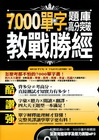 |
7000單字題庫高分突破教戰勝經(附錄全書單字及聽力測驗1... 作者:李宇凡,宇凡高中英語教學團隊/審定 出版社:捷徑文化 出版日期:2011-11-02 語言:繁體中文 規格:平裝 / 352頁 / 21.0*29.7 cm / 普級 / 雙色印刷 / 初版 |
| 圖書選購 |
| 型式 | 價格 | 供應商 | 所屬目錄 | $ 254 |
 五南文化廣場網路書店 五南文化廣場網路書店 |
語言 |
$ 350 |
 iRead灰熊愛讀書 iRead灰熊愛讀書 |
英文 |
$ 395 |
 TAAZE 讀冊生活 TAAZE 讀冊生活 |
中文書 |
|---|
| 圖書館借閱 |
| 國家圖書館 | 全國圖書書目資訊網 | 國立公共資訊圖書館 | 電子書服務平台 | MetaCat 跨館整合查詢 |
| 臺北市立圖書館 | 新北市立圖書館 | 基隆市公共圖書館 | 桃園市立圖書館 | 新竹縣公共圖書館 |
| 苗栗縣立圖書館 | 臺中市立圖書館 | 彰化縣公共圖書館 | 南投縣文化局 | 雲林縣公共圖書館 |
| 嘉義縣圖書館 | 臺南市立圖書館 | 高雄市立圖書館 | 屏東縣公共圖書館 | 宜蘭縣公共圖書館 |
| 花蓮縣文化局 | 臺東縣文化處 |
|
|
圖書介紹 - 資料來源:TAAZE 讀冊生活 評分:
圖書名稱:7000單字題庫高分突破教戰勝經(附贈超過8小時,500分鐘外師親錄全書單字及聽力測驗MP3)
讓你學〝好〞7000單字
同時考好各大檢定考〝試〞!
四大天王全方位測驗題型【超過2000題單字題庫】+ 最豐富單字學習【7000單字完整英英解釋】
一本測出你的字彙真實力!
~隨書附贈~
8小時,500分鐘外師親錄
全書單字及聽力測驗MP3
壹.學習+測驗,考出7000單字全方位實力!
▲字彙-為你精選考試頻率最高、最容易混淆的單字作成綜合填空選擇題,並提供精闢解析!
▲聽力-聽力練習搭配背單字效果最好!實戰練習讓你能更精準抓住外國人的發音訣竅!
▲翻譯-翻譯測驗考你如何「活用」單字,以英文表達自己所想,達到語言溝通的成效!附上關鍵字及句型提示,加強你的翻譯能力!
▲閱讀-閱讀測驗測試你是否能結合詞彙、語意、語法知識,以理解、引申、推理、判斷選文內容!
貳.超滿足!超過2000題精選單字題庫!
▲單字四大天王試題,豐富完整測驗,考前應試複習最有用!
▲針對六大考試應試都OK,基測+學測+指考+英檢+多益+托福一次過關!
參.超有料!單字完整英譯給你真材實料的學習!
▲單字詳細英英解釋,讓你中英對照同時理解語意,增強英文閱讀力!
▲完整收錄KK音標+自然發音,配合附贈超過8小時MP3光碟邊聽邊複誦,念出7000單字不再是煩惱!
作者簡介:
補教名師 李宇凡
【學歷】國立成功大學外國語文學系
美國ATI TESOL INSTITUTE英文教學國際認證合格講師
【經歷】(升大學英語教學)
彰化 家家補習班 / 斗六 佳興補習班 / 嘉義 中興補習班 / 台南 心遠景補習班 / 高雄 仕強補習班屏東 宇凡補習班
COSMOS寰宇補習班TOEFL字彙文法講師
GO STUDY世界學人留學機構IELTS英語教學顧問
升學王語音互動學習網專任講師
【暢銷著作】《英文搶分片語,看這本就夠了》、《英文基礎文法,看這本就夠了》、《黑馬英文單字》、《包中經典名句,抄這本就夠了》、《一眼看懂英文閱讀》、《7000單字用的上、考得好》、《英語單字就從最實用開始》、《7000單字怎麼考都好 教戰勝經》。
【最新著作】《7000單字題庫高分突破教戰勝經》
章節試閱
Level 1 國中小必考1000單字,英檢初級
Aa
1. a / an [3] / [$n] 英初 四級 1-1○很不熟 ○還可以 ○記起來了
used before a noun to refer to a single thing or person that has not been mentioned before
2. a•ble ['eb9] 英初 四級 1-2 ○很不熟 ○還可以 ○記起來了
having ability to do something, also referring to capable
3. a•bout [3'baUt] 英初 四級 1-3 ○很不熟 ○還可以 ○記起來了
on the subject of; connected with
4. a•bove [D'bKv] 英初 四級 1-4
in or to a higher position...
Aa
1. a / an [3] / [$n] 英初 四級 1-1○很不熟 ○還可以 ○記起來了
used before a noun to refer to a single thing or person that has not been mentioned before
2. a•ble ['eb9] 英初 四級 1-2 ○很不熟 ○還可以 ○記起來了
having ability to do something, also referring to capable
3. a•bout [3'baUt] 英初 四級 1-3 ○很不熟 ○還可以 ○記起來了
on the subject of; connected with
4. a•bove [D'bKv] 英初 四級 1-4
in or to a higher position...
»看全部
目錄
【Level 1 國小必考1000單字,英檢初級】
Aa Gg Mm Ss Yy 四大單字題型
Bb Hh Nn Tt Zz 單字考不怕
Cc Ii Oo Uu 聽力考不怕
Dd Jj Pp Vv 翻譯考不怕
Ee Kk Qq Ww 閱讀考不怕
Ff Ll Rr Xx
【Level 2 國中基測必考1200單字,英檢初級】
Aa Gg Mm Ss Yy 四大單字題型
Bb Hh Nn Tt Zz 單字考不怕
Cc Ii Oo Uu 聽力考不怕
Dd Jj Pp Vv 翻譯考不怕
Ee Kk Qq Ww 閱讀考不怕
Ff Ll Rr Xx
【Level 3 高中學測必考2000單字,英檢中級,新多益405~600分】
Aa Gg ...
Aa Gg Mm Ss Yy 四大單字題型
Bb Hh Nn Tt Zz 單字考不怕
Cc Ii Oo Uu 聽力考不怕
Dd Jj Pp Vv 翻譯考不怕
Ee Kk Qq Ww 閱讀考不怕
Ff Ll Rr Xx
【Level 2 國中基測必考1200單字,英檢初級】
Aa Gg Mm Ss Yy 四大單字題型
Bb Hh Nn Tt Zz 單字考不怕
Cc Ii Oo Uu 聽力考不怕
Dd Jj Pp Vv 翻譯考不怕
Ee Kk Qq Ww 閱讀考不怕
Ff Ll Rr Xx
【Level 3 高中學測必考2000單字,英檢中級,新多益405~600分】
Aa Gg ...
»看全部
商品資料
- 作者: 李宇凡
- 出版社: 捷徑文化 出版日期:2011-11-02 ISBN/ISSN:9789866248993
- 語言:繁體中文 裝訂方式:平裝 頁數:352頁
- 類別: 中文書> 語言> 英文
|