一部為物理學專業的高年級本科生和研究生設計的,學習重整化群和場論教程,也是學習凝聚態和粒子物理的必備資料。
簡明扼要,開門見山、直奔主題自由能量的環膨脹,即著名的背景場理論。
這一很有力的方法,尤其是在處理對稱和統計力學的時候尤為重要。專著自由場的講述,避免大篇幅贅述有關場理論技巧的發展,接着全面呈現重整化的必需性。
| FindBook |
|
有 1 項符合
E.布魯金的圖書 |
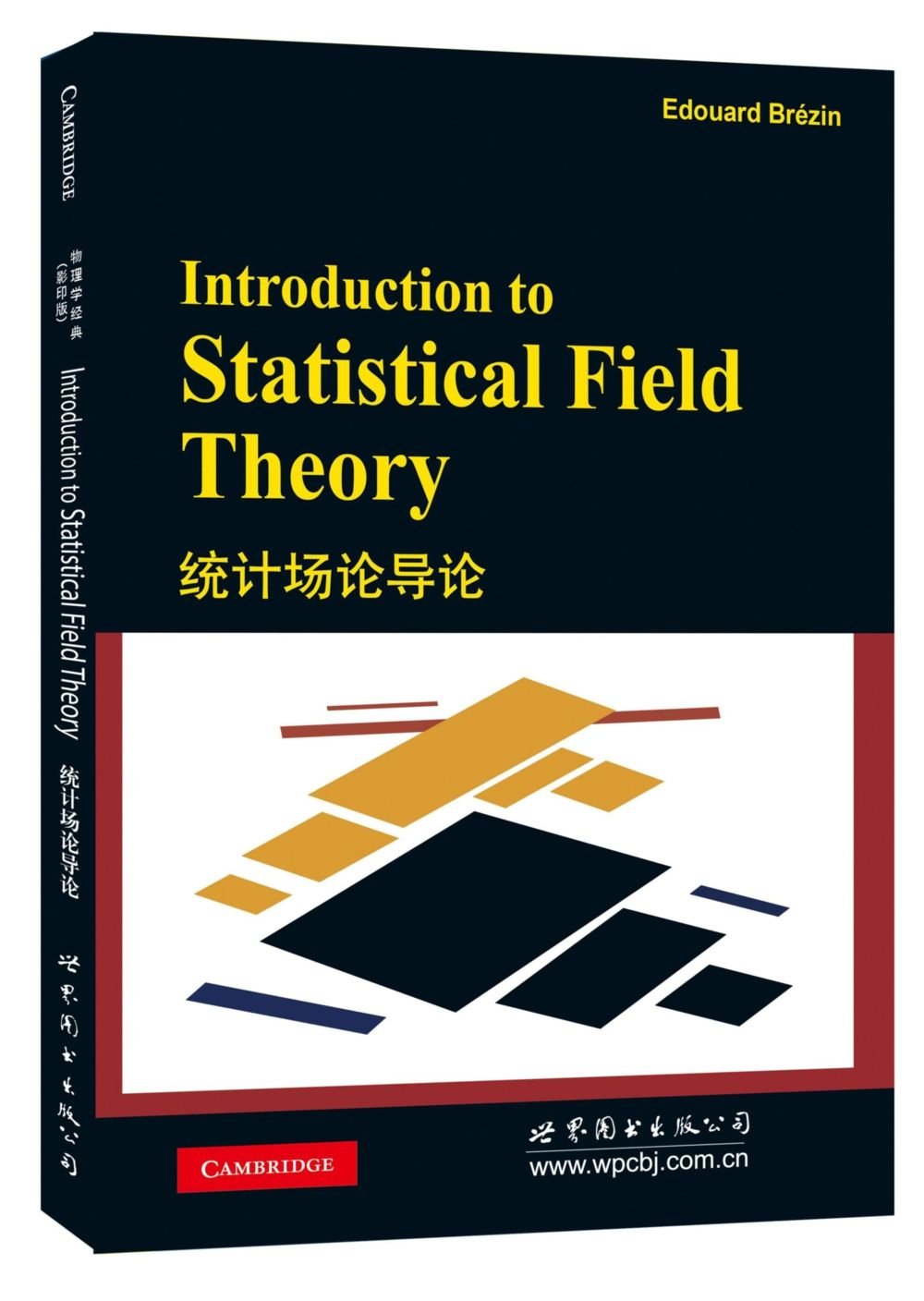 |
$ 235 | 統計場論導論
作者:(法)E.布魯金 出版社:世界圖書出版公司北京公司 出版日期:2015-05-01 語言:簡體中文 規格:166頁 / 普通級/ 1-1  博客來 - 數學
- 來源網頁 博客來 - 數學
- 來源網頁  看圖書介紹 看圖書介紹
|
|
|
圖書介紹 - 資料來源:博客來 評分:
圖書名稱:統計場論導論
內容簡介
目錄
Preface
1 A few well-known basic results
1.1 The Boltzmann law
1.1.1 The classical canonical ensemble
1.1.2 The quantum canonical ensemble
1.1.3 The grand canonical ensemble
1.2 Thermodynamics from statistical physics
1.2.1 The thermodynamic limit
1.3 Gaussian integrals and Wick’’s theorem
1.4 Functional derivatives
1.5 d-dimensional integrals Additional references
2 Introduction: order parameters, broken symmetries
2.1 Can statistical mechanics be used to describe phase transitions?
2.2 The order-disorder competition
2.3 Order parameter, symmetry and broken symmetry
2.4 More general symmetries
2.5 Characterization of a phase transition through correlations
2.6 Phase coexistence, critical points, critical exponents
3 Examples of physical situations modelled by the Ising model
3.1 Heisenberg’’s exchange forces
3.2 Heisenberg and Ising Hamiltonians
3.3 Lattice gas
3.4 More examples
3.5 A first connection with field theory
4 A few results for the Ising model
4.1 One-dimensional Ising model: transfer matrix
4.2 One-dimensional Ising model: correlation functions
4.3 Absence of phase transition in one dimension
4.4 A glance at the two-dimensional Ising model
4.5 Proof of broken symmetry in two dimensions (and more)
4.6 Correlation inequalities
4.7 Lower critical dimension: heuristic approach
4.8 Digression: Feynman path integrals, the transfer matrix and the Schrodinger equation
5 High-temperature and low-temperature expansions
5.1 High-temperature expansion for the Ising model
5.1.1 Continuous symmetry
5.2 Low-temperature expansion
5.2.1 Kramers-Wannier duality
5.3 Low-temperature expansion for a continuous symmetry group
6 Some geometric problems related to phase transitions
6.1 Polymers and self-avoiding walks
6.2 Potts model and percolation
7 Phenomenological description of critical behaviour
7.1 Landau theory
7.2 Landau theory near the critical point: homogeneous case
7.3 Landau theory and spatial correlations
7.4 Transitions without symmetry breaking: the liquid-gas transition
7.5 Thermodynamic meaning of F {m}
7.6 Universality
7.7 Scaling laws
8 Mean field theory
8.1 Weiss ’’molecular field’’
8.2 Mean field theory: the variational method
8.3 A simpler alternative approach
9 Beyond the mean field theory
9.1 The first correction to the mean-field free energy
9.2 Physical consequences
10 Introduction to the renormalization group
10.1 Renormalized theories and critical points
10.2 Kadanoff block spins
10.3 Examples of real space renormalization groups: ’’decimation’’
10.4 Structure of the renormalization group equations
11 Renormalization group for the q94 theory
11.1 Renormalization group ... without renormalization
11.2 Study of the renormalization group flow in dimension four
11.3 Critical behaviour of the susceptibility in dimension four
11.4 Multi-component order parameters
11.5 Epsilon expansion
11.6 An exercise on the renormalization group: the cubic fixed point
12 Renormalized theory
12.1 The meaning of renormalizability
12.2 Renormalization of the massless theory
12.3 The renormalized critical free energy (at one-loop order)
12.4 Away from Tc
13 Goldstone modes
13.1 Broken symmetries and massless modes
13.2 Linear and non-linear O(n) sigma models
13.3 Regularization and renormalization of the O(n) non-linear sigma model in two dimensions
13.3.1 Regularization
13.3.2 Perturbation expansion and renormalization
13.4 Renormalization group equations for the O(n) non-linear sigma model and the (d - 2) expansion
13.4.1 Integration of RG equations and scaling
13.5 Extensions to other non-linear sigma models
14 Large n
14.1 The linear O(n) model
14.2 O(n) sigma model
Index
1 A few well-known basic results
1.1 The Boltzmann law
1.1.1 The classical canonical ensemble
1.1.2 The quantum canonical ensemble
1.1.3 The grand canonical ensemble
1.2 Thermodynamics from statistical physics
1.2.1 The thermodynamic limit
1.3 Gaussian integrals and Wick’’s theorem
1.4 Functional derivatives
1.5 d-dimensional integrals Additional references
2 Introduction: order parameters, broken symmetries
2.1 Can statistical mechanics be used to describe phase transitions?
2.2 The order-disorder competition
2.3 Order parameter, symmetry and broken symmetry
2.4 More general symmetries
2.5 Characterization of a phase transition through correlations
2.6 Phase coexistence, critical points, critical exponents
3 Examples of physical situations modelled by the Ising model
3.1 Heisenberg’’s exchange forces
3.2 Heisenberg and Ising Hamiltonians
3.3 Lattice gas
3.4 More examples
3.5 A first connection with field theory
4 A few results for the Ising model
4.1 One-dimensional Ising model: transfer matrix
4.2 One-dimensional Ising model: correlation functions
4.3 Absence of phase transition in one dimension
4.4 A glance at the two-dimensional Ising model
4.5 Proof of broken symmetry in two dimensions (and more)
4.6 Correlation inequalities
4.7 Lower critical dimension: heuristic approach
4.8 Digression: Feynman path integrals, the transfer matrix and the Schrodinger equation
5 High-temperature and low-temperature expansions
5.1 High-temperature expansion for the Ising model
5.1.1 Continuous symmetry
5.2 Low-temperature expansion
5.2.1 Kramers-Wannier duality
5.3 Low-temperature expansion for a continuous symmetry group
6 Some geometric problems related to phase transitions
6.1 Polymers and self-avoiding walks
6.2 Potts model and percolation
7 Phenomenological description of critical behaviour
7.1 Landau theory
7.2 Landau theory near the critical point: homogeneous case
7.3 Landau theory and spatial correlations
7.4 Transitions without symmetry breaking: the liquid-gas transition
7.5 Thermodynamic meaning of F {m}
7.6 Universality
7.7 Scaling laws
8 Mean field theory
8.1 Weiss ’’molecular field’’
8.2 Mean field theory: the variational method
8.3 A simpler alternative approach
9 Beyond the mean field theory
9.1 The first correction to the mean-field free energy
9.2 Physical consequences
10 Introduction to the renormalization group
10.1 Renormalized theories and critical points
10.2 Kadanoff block spins
10.3 Examples of real space renormalization groups: ’’decimation’’
10.4 Structure of the renormalization group equations
11 Renormalization group for the q94 theory
11.1 Renormalization group ... without renormalization
11.2 Study of the renormalization group flow in dimension four
11.3 Critical behaviour of the susceptibility in dimension four
11.4 Multi-component order parameters
11.5 Epsilon expansion
11.6 An exercise on the renormalization group: the cubic fixed point
12 Renormalized theory
12.1 The meaning of renormalizability
12.2 Renormalization of the massless theory
12.3 The renormalized critical free energy (at one-loop order)
12.4 Away from Tc
13 Goldstone modes
13.1 Broken symmetries and massless modes
13.2 Linear and non-linear O(n) sigma models
13.3 Regularization and renormalization of the O(n) non-linear sigma model in two dimensions
13.3.1 Regularization
13.3.2 Perturbation expansion and renormalization
13.4 Renormalization group equations for the O(n) non-linear sigma model and the (d - 2) expansion
13.4.1 Integration of RG equations and scaling
13.5 Extensions to other non-linear sigma models
14 Large n
14.1 The linear O(n) model
14.2 O(n) sigma model
Index
|