| FindBook |
|
有 1 項符合
Paul Magid的圖書 |
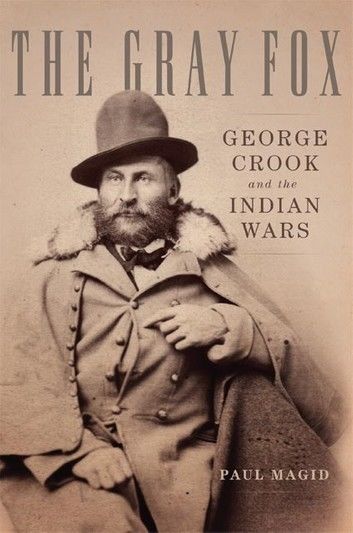 |
$ 592 電子書 | The Gray Fox
作者:Paul Magid 出版社:University of Oklahoma Press 出版日期:2015-04-23 語言:英文  樂天KOBO - 歷史文學
- 來源網頁 樂天KOBO - 歷史文學
- 來源網頁  看圖書介紹 看圖書介紹
|
|
|
George Crook was one of the most prominent military figures of the late-nineteenth-century Indian Wars. Yet today his name is largely unrecognized despite the important role he played in such pivotal events in western history as the Custer fight at the Little Big Horn, the death of Crazy Horse, and the Geronimo campaigns. As Paul Magid portrays Crook in this highly readable second volume of a projected three-volume biography, the general was an innovative and eccentric soldier, with a complex and often contradictory personality, whose activities often generated intense controversy. Though known for his uncompromising ferocity in battle, he nevertheless respected his enemies and grew to know and feel compassion for them.
Describing campaigns against the Paiutes, Apaches, Sioux, and Cheyennes, Magid’s vivid narrative explores Crook’s abilities as an Indian fighter. The Apaches, among the fiercest peoples in the West, called Crook the Gray Fox after an animal viewed in their culture as a herald of impending death. Generals Grant and Sherman both regarded him as indispensable to their efforts to subjugate the western tribes. Though noted for his aggressiveness in combat, Crook was a reticent officer who rarely raised his voice, habitually dressed in shabby civilian attire, and often rode a mule in the field. He was also self-confident to the point of arrogance, harbored fierce grudges, and because he marched to his own beat, got along poorly with his superiors. He had many enduring friendships both in- and outside the army, though he divulged little of his inner self to others and some of his closest comrades knew he could be cold and insensitive.
As Magid relates these crucial episodes of Crook’s life, a dominant contradiction emerges: while he was an unforgiving warrior in the field, he not infrequently risked his career to do battle with his military superiors and with politicians in Washington to obtain fair treatment for the very people against whom he fought. Upon hearing of the general’s death in 1890, Chief Red Cloud spoke for his Sioux people: “He, at least, never lied to us. His words gave the people hope.”
|