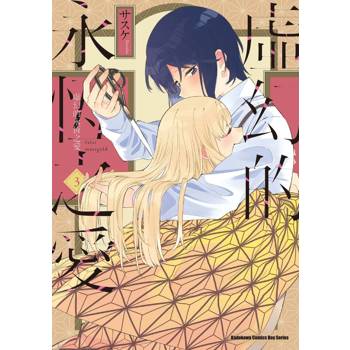
觸動心靈的寓言故事 小時候,故事書經常是陪伴我們長大的忠實良伴,在成長的過程中引領著我們。好的故事會觸動心靈,並且啟發我們要讓自己和周遭的世界變得更好。故事,也會形塑我們的價值觀,而我們最終成為什麼樣的人將取決於這些價值觀。 星雲大師著《星雲說喻 中英對照版》一共六冊,讓讀者透過閱讀生動有趣的故事,探索並領悟佛陀深奧的教法和人間佛教理念。故事圍繞著佛教的「六度波羅蜜」開展,也就是菩薩道的「六度」精神:布施、持戒、忍辱、精進、禪定和般若。每篇故事以一則智慧法語作為總結,引導讀者省思個中寓意。這些故事如同一面明鏡,帶著我們檢視生活,思維如何將那永恆不朽的佛法應用在生活。 第四冊收錄十五篇以六度波羅蜜中的「精進」為主題的短篇故事。這是一套適合所有年齡層讀者的故事選集,本套書亦提供中英詞彙表,雙語讀者能更好理解每則故事的精髓。 期許《星雲說喻 中英對照版》能帶領讀者探索故事中無窮的慈悲、智慧與布施精神,照亮生命的道路。 Since our earliest days, stories have been faithful companions, guiding us through life’s journey. The power of a good story lies in its ability to touch our hearts, inspiring us to grow and bring positive change to ourselves and the world around us. Stories shape our perspective, and in turn, our perspective shapes who we become. Introducing Bodhi Light Tales by Venerable Master Hsing Yun, a monumental 6-volume set available in both English and Chinese. This enchanting collection invites readers to explore the profound teachings of the Buddha and the principles of Humanistic Buddhism. Stories centered around the Six Paramitas, also known as the Six Perfections: Generosity, Precept, Patience, Diligence, Meditative Concentration, and Wisdom. Each tale in this collection is accompanied by words of wisdom, offering profound insights that encourage reflection upon the moral lessons conveyed. These stories provide a mirror through which we can examine our own lives and contemplate how these timeless teachings can be applied to our daily existence. In this fourth volume, you will immerse yourself in the realm of Diligence through a treasury of 15 short stories. Designed to captivate readers of all ages, this book also includes vocabulary lists to assist bilingual readers in fully understanding the essence of each tale. May Bodhi Light Tales illuminate your path as you explore the boundless possibilities of compassion, understanding, and generosity.
Biography of Venerable Master Hsing Yun Venerable Master Hsing Yun was born in 1927 in Jiangdu, Jiangsu Province, China. At the age of 12, he was tonsured by Venerable Master Zhikai in Qixia Temple, Nanjing, with Dajue Temple in Yixing, Jiangsu, as his ancestral temple. He later became the 48th-generation lineage holder of the Linji Chan school. In 1947, he graduated from Jiaoshan Buddhist College, and also trained at various Chan, Pure Land, and Vinaya monasteries, including Jinshan, Qixia, and others. He received a comprehensive Buddhist education in the lineage, teachings, and Vinaya disciplines. Later on, the Venerable Master was invited to serve as the principal of Baita Elementary School, and also the editor-in-chief of Raging Billows Monthly. In the spring of 1949, the Venerable Master arrived in Taiwan. He served as the editor-in-chief of Human Life Magazine, Buddhism Today Magazine, and Awakening the World. In 1967, the Venerable Master founded the Fo Guang Shan Buddhist Order, with the Four Objectives: to propagate the Dharma through culture; to foster talents through education; to benefit society through charity, and to purify people’s minds through spiritual cultivation. Guided by the principles of Humanistic Buddhism, he went on to establish over three hundred temples worldwide. Additionally, he oversaw the creation of various art galleries, libraries, publishing companies, bookstores, the Merit Times newspaper, and the Cloud and Water Mobile Clinic. Furthermore, he established sixteen Buddhist colleges and founded three high schools and five universities, including the University of the West in the United States, Fo Guang University in Taiwan, Nanhua University in Taiwan, Nan Tien Institute in Australia, and Guang Ming College in the Philippines. Notably, he also established the Institute of Humanistic Buddhism. In 1970, the Venerable Master established Da Ci Children’s Home and the Lanyang Ren Ai Senior Citizen’s Home, providing shelter and care for vulnerable young children, and elderly individuals. He also actively engaged in emergency relief efforts, contributing to the fostering of a welfare society. Then, in 1991, he founded the Buddha’s Light International Association (BLIA) and was elected as the President of the World Headquarters. Under his guidance, the association’s mission expanded, symbolized by the saying, “the Buddha’s Light shining over three thousand realms, and the Dharma water flowing continuously through the five continents. In 1977, the Fo Guang Buddhist Canon, the Fo Guang Dictionary of Buddhism, and the 132-volume Selected Chinese Buddhist Texts in Modern Language were compiled. In 2017, the Complete Works of Venerable Master Hsing Yun was published, comprising 365 volumes with over 30 million words. In 2023, it was supplemented to 395 volumes, exceeding 40 million words, systematically expounding the ideologies, teachings, theories, and practical outcomes of Humanistic Buddhism. In 2023, the Venerable Master peacefully passed away, his virtuous deeds complete and fulfilled, having reached the age of ninety-seven. He was revered as the Founding Master of the Fo Guang Order, and he left behind this poignant poem:
A mind with the compassionate vow to deliver sentient beings, A body like a boat on the Dharma ocean, unbound. Should you ask what I have achieved in this lifetime? Peace and happiness shine upon the five continents.
Bodhi Light Tales is a captivating 6-volume collection of stories focused on the Six Paramitas, narrated by the revered Venerable Master Hsing Yun. Originally published in Chinese as Xingyun shuoyu (星雲說喻), these Buddhist Tales by Venerable Master Hsing Yun emerged from his enlightening talks and lectures on Humanistic Buddhism. In 2019, we took the initiative to adapt these stories into English as an ongoing audiobook series for the Bodhi Light Tales Anchor Podcast channel. However, our ultimate vision has always been to present them in a book format. As the original stories were concise and lacked additional details, the English adaptations were intentionally modified from the Chinese. In essence, the English tales are not direct translations of their original Chinese counterparts. To ensure that readers of all ages, faiths, beliefs, and cultures can connect with these stories, we employed several key approaches during the transition from Chinese to English, which we will elaborate on below. To make the main characters more relatable, we added background information such as their names, occupations, and personalities. Thorough research was conducted to maintain historical and factual accuracy. We hope this additional information will help readers delve deeper into their favorite characters and even encourage further exploration. Additionally, we made certain adaptations to accommodate language differences. For instance, in one of the stories, one single plane mentioned at first transformed into eleven planes, and in the end, ninety-one planes. In the English version, we changed it to nine planes as mentioned initially, later becoming nineteen planes, and finally, ninety planes. These modifications were implemented to preserve the example of homophones originally featured, ensuring comprehension for English readers. Each tale concludes with a summary of its morals, providing readers with a clear understanding of the story’s meaning and key lessons. These summaries highlight challenges people face in today’s world and offer practical applications for daily life. Additionally, we included Dharma Words from Venerable Master Hsing Yun at the end of each story, offering readers a final nugget of wisdom to take away. These quotes were carefully selected based on their relevance to the moral of each story. Venerable Master Hsing Yun originally shared these words of encouragement and advice based on his life experiences, aiming to inspire mindfulness and guide individuals in times of uncertainty. Remember, Buddha-nature resides within all of us, regardless of whether we practice Buddhism or not. Both children and adults have the power to better themselves and positively impact the world around them. Our sincere hope is that these stories will inspire people of all ages, instilling in them a sense of inspiration, courage, and compassion. May this collection serve as a source of inspiration as you navigate through life’s journey toward self-awakening!

Once upon a time, a merchant named Marcus went abroad on a business trip. Over there, he was invited by his friend, James, to his house to have dinner. “Welcome to my house, my dear friend. It is great to see you again after so long,” said James. “James, it is great to see you too! You have such a beautiful house,” admired1 Marcus. “Let me show you around my house,” offered James happily. Marcus quickly saw that James paid great attention2 to every detail3, as everything in the house was made of the finest materials. Everything was just perfect. When they reached the third floor of the house, Marcus was even more impressed4 by the amazing view from the balcony. It was the most beautiful scenery he had ever seen in his whole life. The view was like something out of a movie. He saw an entire valley of lush green fields, all glowing5 in the light of the setting sun. Far out in the distance, the mountains were tall and majestic6. A pack of birds flew by, singing their beautiful songs. “How amazing7! This view is simply fantastic8! I have never seen anything like this. I am going to build a third floor and a balcony too when I get back,” exclaimed9 Marcus. As he made his way back to his own home, Marcus kept thinking about the view he saw and dreamt of what he would see once his third floor and balcony were finally built. He planned to have a nice cup of hot coffee up there every morning after breakfast. After every hard day of work, he would look at the beautiful sunset every evening. On weekends, he could invite his friends to his house for dinner and they would all enjoy the view together. Marcus could not stop thinking about how happy he would be once he had his “third floor.” When he arrived home, Marcus immediately10 hired a team of builders to construct his “third floor.” “As quick as you can please! Build me the third floor with a beautiful view!” demanded11 Marcus. The team drew up a building plan. Then, as they started work by laying the foundation12, they were stopped by Marcus. “What are you doing?” he asked the builders. “Didn’t you want us to build a three-story mansion13?” they asked. “Yes, but I just want the third floor,” said Marcus impatiently14. “I don’t want a first or second floor.” “That is impossible, sir. The third floor can only be built on a good foundation, meaning a first and second floor. You cannot build the third floor by itself!” explained the workers. However, Marcus insisted on wanting only the third floor without the necessary15 foundations. Eventually, fed up with this nonsense16, the workers left, and Marcus did not have any house built, not to mention, his most desired17 “third floor.” This story teaches us that only when we start from the ground up, and build a firm foundation upon the first and second floor, can we then enjoy a beautiful view from the third. There is a saying, “Mighty oaks18 from little acorns19 grow.” This means that great things come from small beginnings. Just as Venerable Master Hsing Yun teaches, “The key to success is persistence20. The key to success is awareness of causes and conditions. Strive for your goal, but don’t be impatient. There is no success except through hard work. Success comes when you learn from your failures. Just as a delicious food needs seasoning, results require practice and effort. Modesty brings harmony; Diligence brings achievement. Kindness and patience reveal your grace.” Whether in our worldly lives, or our spiritual21 cultivation22, it is essential to first establish23 a strong foundation with great care. Only with a strong foundation will results take care of themselves. In this way, we will have a beautiful “third floor” in our lives, from which we can enjoy the wonderful view of our achievements.
星雲大師法語 Dharma Words by Venerable Master Hsing Yun 爭氣,不要生氣。 成功要靠自己努力,別無他途。 失敗要靠自己檢討,猶有可為。 Strive for your goal, but don’t be impatient. There is no success except through hard work. Success comes when you learn from your failures.
The Lesson 就職第一課 有家公司剛聘任一位祕書,某天,公司來了一位想謀職的人,祕書隨即將此人帶到總經理辦公室,以待面試。總經理與這位求職者談了一陣子,即請祕書把客人送走。等祕書送走客人之後,總經理就問:
Once upon a time, there lived a young lady named Sylvia. She recently graduated from college but was still unsure as to what she wanted to do in life. Under pressure1 in having to pay her bills, Sylvia applied for a job as a personal assistant2 in a finance company. Not long after submitting3 her application, she was interviewed by Hugo, the General Manager, and got the job. One month into her new job, Sylvia had received all the training required and was well-equipped4 to perform her duties. One day, a man named Dominic arrived at the reception desk. “Hello, how can I help you?” Sylvia asked. “Hi, my name is Dominic. I’m here for an interview with Hugo Reynolds,” Dominic said. “Are you sure? I don’t have you scheduled5 in his calendar. Please wait, ” Sylvia replied. “I am sure, the appointment was booked for 1 p.m.,” Dominic said. “I’m sorry, it seems like I’ve double- booked him for that time. Let me check if Hugo can still do the interview right now,” Sylvia said. “Okay, thank you,” Dominic replied. Without delay6, Sylvia made a phone call. After a quick conversation7, she said to Dominic, “Hugo is available for the interview. Can you please sign the guest form?” After he’d completed the form, Sylvia brought Dominic to Hugo’s office. Sylvia knocked on the door and she heard Hugo say, “Please come in.” Sylvia then signaled8 for Dominic to enter. Hugo was already standing with his hand out for a handshake9, “Nice to meet you,” Hugo said. “Nice to meet you too,” Dominic replied. “Please have a seat,” Hugo said. Sylvia then poured10 a glass of water for Dominic. Before she put the glass down on the table, Dominic had already raised11 both of his hands to receive it and said to her warmly, “Thank you very much.” Sylvia nodded and left the room. The interview ended fairly quickly. Hugo walked Dominic to the reception desk and said, “It was a pleasure12 meeting you. We will contact13 you in a few days. Have a good evening.” “Thank you very much. I look forward to hearing from you,” Dominic replied. As he was leaving, Hugo heard Dominic say to Sylvia, “Thank you for the glass of water. That was very kind of you. It really helped me settle down14 for the interview.” “You’re welcome. Before you leave, please sign off here.” After Dominic signed the form, he said, “Thank you again. Hope to see you soon.” Sylvia nodded and waved15 goodbye. Then, her phone rang. It was Hugo asking her to come to his office. “Please send this out today. It’s urgent16,” Hugo said to Sylvia as he handed her an envelope. “Will do,” Sylvia replied. “By the way, what do you think about Dominic?” Hugo asked. “I don’t know… I only just met him,” Sylvia replied. Hugo then asked, “What about his skills17 and knowledge18? Do you think he is a good fit for this company?” “I don’t know… I didn’t look at his resume19,” Sylvia replied. Hugo continued, “What about his character? Do you think he has potential20?” “I don’t know… I just welcomed him and brought him to your office. How can I judge a person based only on a few minutes of interaction?” Hugo looked at Sylvia disappointedly and said “I expect, at the very least, for you to give me some feedback on him, even if you’ve only met briefly. You didn’t notice, or have any thoughts or feelings on how he thanked you personally for giving him a glass of water? It shows that not only is he polite but also thankful and compassionate. How many people do you know say thank you personally to a receptionist or an assistant after an interview, for giving them a glass of water? You not noticing these details and answering ‘I don’t know’ to all my questions reveal to me you have a rather careless and sloppy21 attitude to your own job and responsibilities.” Stunned22, Sylvia replied, “I thought my job was to greet visitors, make sure they get to where they need to go, and escort23 them out.” Now looking even more disappointed, Hugo said, “Yes, those are your responsibilities as my assistant. But I expect more from you. I hope that you are mindful24 and attentive25 to everything that happens around you. If you don’t pay close attention to details, then your achievements will be rather limited. You have eyes and ears, use them wisely. Don’t merely see but observe attentively. Don’t just hear but listen closely. If you can use both keen26 observation and awareness when doing your job and living your life, then I’m sure you’ll have a successful future.” Hugo’s words struck Sylvia like a lightning bolt. She said to Hugo, “You’re right. I’ve been careless and inattentive. Thank you for teaching me a most valuable lesson.” This story highlights the importance of being mindful and aware. Like Sylvia, if we live our lives or do our jobs carelessly or unaware, then our ability to solve problems and face obstacles27 will be limited. If we can train our senses and minds to perceive and process accordingly, then we’ll be equipped to face and resolve28 any challenges we may encounter. Our friends, elders, and colleagues may teach us lessons we ought to listen to and learn from. If we are receptive29 and open to their guidance, as we accumulate30 lessons and wisdom from these experiences, we shall surely improve and better ourselves. Like Sylvia, she was appreciative of the lesson Hugo taught her. With a mindset of aspiring31 to improve ourselves and cultivating our minds, we can transform ourselves and benefit society. If we are open-minded32 and humble33 in the face of advice and criticism34 from others, we shall set ourselves on the path towards becoming a most capable and competent35 person in whatever we do in our lives.
星雲大師法語 Dharma Words by Venerable Master Hsing Yun 上課聞道要有歡喜心, 指導訓話要有接受心, 做事擔當要有勇敢心, 和人相處要有恭敬心。 In the pursuit of learning, maintain a joyful attitude. In the face of advice, keep an open mind. In taking on responsibility, show courage. In dealing with others, remain respectful.
The Third Floor 第三層樓 久遠以前,有一個大富翁很希望自己能擁有一棟三層樓的房子,於是遣人找來了一位建築師。建築師一到,大富翁就問:「你可不可以幫我建造一棟三層樓高的房子?」建築師聽後,當下應允,並且說:「依照目前的技術,建築三層樓的房子是沒有問題的。」
Bodhi Light Tales:Volume 4 Biography of Venerable Master Hsing Yun 星雲大師簡介 Editor’s Introduction 編者序 How to Use This Book 如何使用本書
Stories 01. The Four Wives 富翁與四位夫人 02. Where Is Happiness? 幸福在尾巴上 03. Tuning the String Properly 彈琴 04. The Third Floor 第三層樓 05. Steps of Life 人生的階梯 06. Persistence Is Key 伎兒得牛 07. The Poisonous Scorpion 毒蠍 08. To Have Only Stolen Once 偷自己的真心 09. The Bubble Necklace 水泡花鬘 10. The Lesson 就職第一課 11. Heavy Bag 還重嗎? 12. Laziness Is Your Downfall 懶惰之害 13. A Mother’s Love 背母親 14. The Squashed“ Frog” 茄子喻 15. The Diligent Little Dog 小狗也會說話
Bodhi Light Tales:Volume 4 Biography of Venerable Master Hsing Yun 星雲大師簡介 Editor’s Introduction 編者序 How to Use This Book 如何使用本書
Stories 01. The Four Wives 富翁與四位夫人 02. Where Is Happiness? 幸福在尾巴上 03. Tuning the String Properly 彈琴 04. The Third Floor 第三層樓 05. Steps of Life 人生的階梯 06. Persistence Is Key 伎兒得牛 07. The Poisonous Scorpion 毒蠍 08. To Have Only Stolen Once 偷自己的真心 09. The Bubble Necklace 水泡花鬘 10. The Lesson 就職第一...